


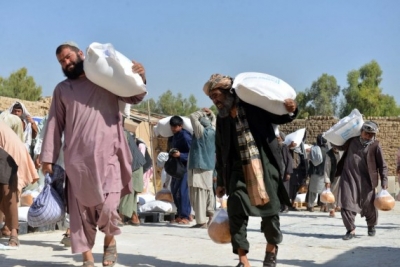
The World Food Programme (WFP) has expressed concern about Afghanistan’s hunger crisis, citing acute food insecurity affecting millions amidst escalating border conflicts with Pakistan. Without adequate funding, the agency may struggle to assist refugees fleeing Iran and Pakistan, as well as internally displaced individuals due to border conflicts. Afghanistan faces a severe hunger crisis, with 17.4 million people, one in three Afghans, urgently requiring food assistance.
The WFP Afghanistan Representative and Country Director, John Aylieff, highlighted the escalating cross-border violence between Pakistan and Afghanistan, which has displaced around 20,000 Afghan families in various regions. Due to the conflict, WFP has had to temporarily halt emergency, social protection, school feeding, and livelihood activities across several Afghan provinces, impacting nearly 160,000 individuals.
Aylieff emphasized concerns about violence in Iran leading to a potential increase in returnees to Afghanistan, as witnessed in previous surges during heightened fighting. The influx of returnees from Iran and Pakistan in 2025, exceeding 2.5 million, coupled with projections for a similar trend in 2026, poses challenges to an underfunded humanitarian response. The WFP warns that emergency operation funding is at risk of depletion in the coming month, jeopardizing critical support for millions in Afghanistan.
For the winter response in 2026, WFP managed to provide food assistance to only a fraction of those in need, underscoring the urgent need for US$313 million in funding for the next six months. Aylieff urged the international community to fulfill their commitments and support Afghanistan during this critical period.
