


There are certain dishes that don’t just feed you—they comfort you. Dishes that feel like someone understood exactly what your body and your spirit needed during a particular moment and cooked accordingly. Dahi aloo is that dish for Navratri.
It’s not flashy. It doesn’t require a long list of ingredients or hours of standing at the stove. But when you lift a spoon of that silky, golden yogurt gravy and get a piece of soft potato that’s soaked up all that gentle, cumin-kissed flavor—it feels like a reward. Like the fast itself is being honored not through deprivation, but through care.
Table of Contents
What Exactly Is Dahi Aloo?
Dahi aloo—also known as dahi wale aloo—is a sattvic potato curry from North India where boiled potatoes are simmered in a spiced yogurt gravy flavored with cumin, ginger, and mild spices. It’s made without onion or garlic, which makes it perfectly aligned with Navratri fasting rules and the principles of sattvic cooking.
The dish has a kadhi-like consistency—semi-thick, creamy, and deeply comforting. The gravy gets its body from besan (gram flour) whisked into the curd, which acts as a stabilizer and gives the sauce that characteristic smooth, velvety texture. In UP households especially, dahi aloo and kuttu puri are almost inseparable on the Navratri table—a pairing that’s been going on for generations.
What makes this dish work isn’t any single ingredient but the balance between all of them. The tanginess of the yogurt. The earthiness of the cumin. The gentle heat of the ginger and chili. The soft, yielding potato that absorbs all of it. When you get it right, it’s the kind of food that feels both humble and satisfying at the same time.
CHECK MORE ON: Singhare Ka Halwa Recipe
Recipe Overview
| Detail | Information |
|---|---|
| Prep Time | 10 minutes |
| Cook Time | 15 minutes |
| Total Time | 25 minutes |
| Servings | 4 people |
| Cuisine | North Indian (Punjabi-style) |
| Course | Main Course/Side Dish |
| Diet | Vegetarian, Gluten-Free, Vrat-Friendly, Sattvic |
| Difficulty Level | Easy-Medium |
| Calories per Serving | ~200 kcal |
Ingredients List
| Ingredient | Quantity | Notes |
|---|---|---|
| Boiled potatoes | 4 medium (400g) | Boiled, peeled and roughly crumbled |
| Fresh curd (yogurt) | 1 cup | Full-fat for best creaminess |
| Besan (gram flour) | 1 teaspoon | Prevents curd from splitting |
| Ghee | 2 tablespoons | For tempering |
| Cumin seeds | 1 teaspoon | For tempering |
| Ginger | 1 teaspoon | Freshly grated |
| Green chilies | 1-2 | Slit or finely chopped |
| Turmeric powder | ¼ teaspoon | For color |
| Coriander powder | 1 teaspoon | For flavor depth |
| Red chili powder | ½ teaspoon | Adjust to taste |
| Sendha namak (Rock salt) | To taste | Use regular salt if not fasting |
| Water | 1½ cups | For gravy consistency |
| Fresh coriander | For garnish | Chopped |
Why Dahi Aloo Is Perfect for Navratri Fasting
During Navratri, the usual architecture of a meal changes. No wheat, no rice, no regular salt, no onion or garlic. What you’re left with is a specific set of ingredients—potatoes, kuttu, singhara, sabudana, sama rice, fresh curd, and sendha namak—and the challenge of making meals that feel complete and nourishing within those boundaries.
Probiotic support from yogurt. Fresh curd is full of beneficial bacteria that support digestion—important during fasting when your gut is working differently. The lactic acid in yogurt also naturally tenderizes the potatoes as they simmer, making every bite softer and more flavorful.
Sustained energy from potatoes. With a moderate glycemic index of around 50 and roughly 500mg of potassium per serving, potatoes provide steady energy and help maintain electrolyte balance during long fasting hours. They’re not the empty carbs people sometimes dismiss them as—when cooked right and paired with protein, they’re genuinely sustaining.
Protein that counts. With approximately 8 grams of protein per serving—4 from the curd and the rest from the besan and potatoes—dahi aloo delivers more nutritional substance than most vrat dishes. During fasting, when protein sources are limited, that matters.
The Secret to Perfect Dahi Aloo: Low Heat and Besan
Before we get into the step-by-step, let’s talk about the thing that trips most people up with yogurt-based curries: the curd splitting.
You’ve probably seen it happen. You add yogurt to a hot pan, and within seconds it breaks into a grainy, watery mess that looks nothing like the silky gravy you were hoping for. It’s frustrating, and it’s one of the most common reasons people avoid curd-based curries.
The solution is two things working together: besan and low heat.
Besan, whisked into the curd before it goes into the pan, acts as an emulsifier. It binds the fat and water molecules in the yogurt together, preventing them from separating when they hit heat. The result is a gravy that stays smooth and cohesive even as it simmers. Low heat does the rest—giving the emulsion time to set without shocking it into breaking.
Get these two things right, and dahi aloo becomes one of the most reliable gravies in your fasting repertoire.
Step-by-Step Instructions: Making Perfect Dahi Aloo
Step 1: Prepare the Potatoes
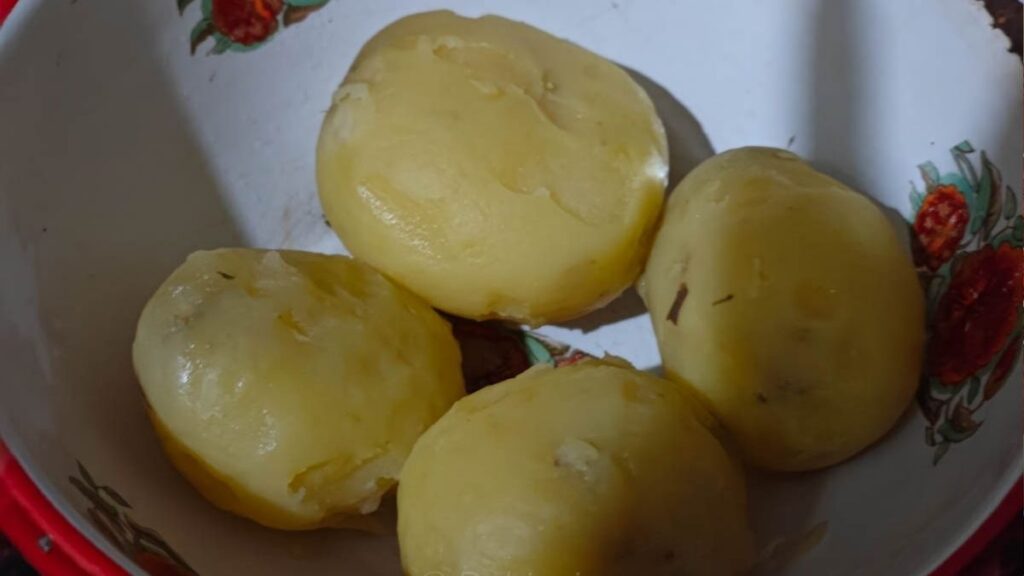
Boil 4 medium potatoes until they’re completely soft—you should be able to pierce them easily with a fork. Peel them while they’re still warm and crumble them into medium-sized pieces. Don’t cut them into perfect cubes; the rough edges help them absorb the gravy better. Set them aside.
Time: 10 minutes (can be done ahead)
Step 2: Prepare the Curd Mixture
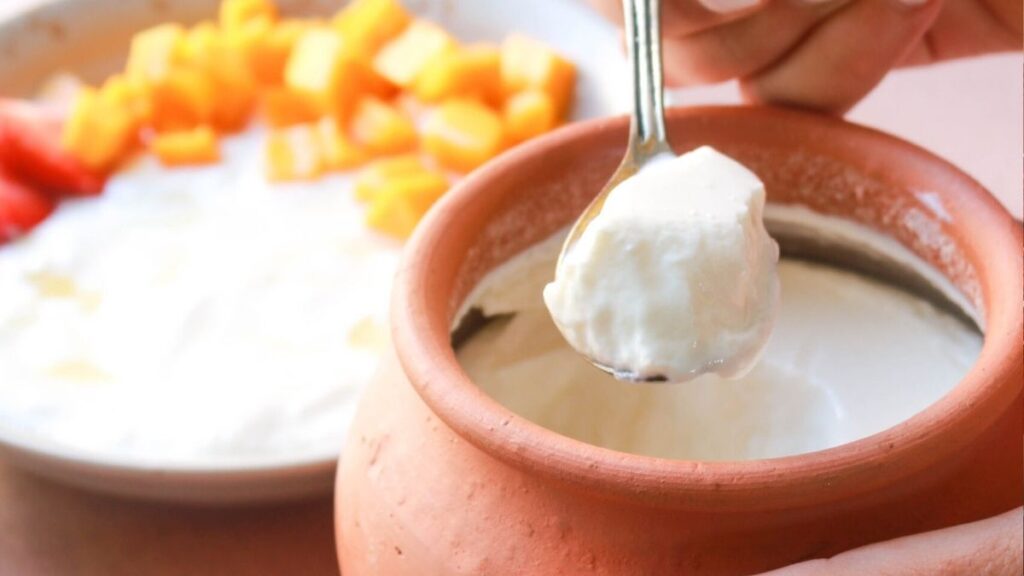
In a mixing bowl, add 1 cup of fresh full-fat curd. Add 1 teaspoon of besan and 1½ cups of water. Whisk everything together vigorously until completely smooth with no lumps. This is important—any lumps of besan will remain in the finished gravy and give it an unpleasant texture. Take your time here. A smooth, well-whisked base is half the battle.
Time: 2 minutes
Step 3: Temper the Spices
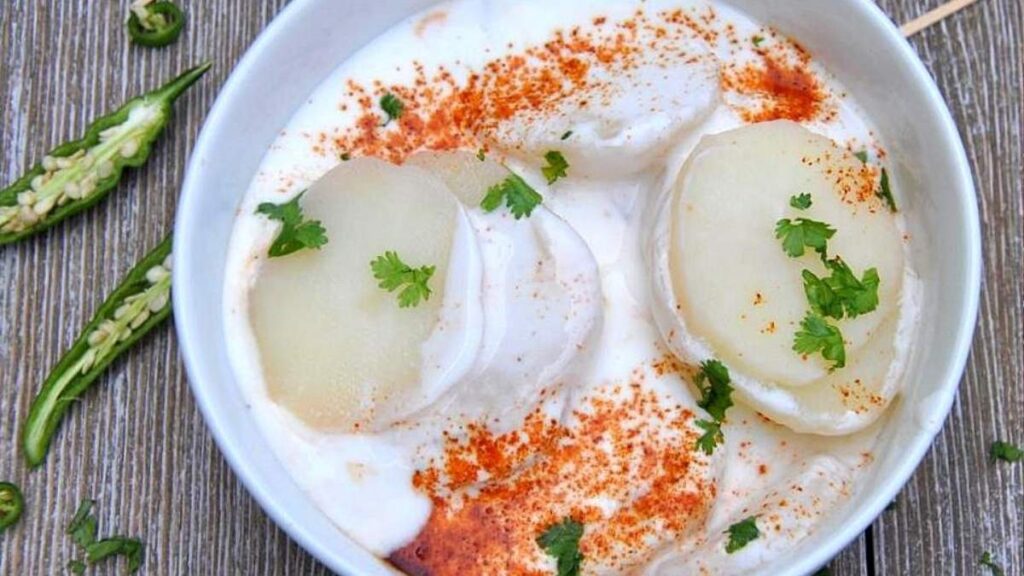
Heat 2 tablespoons of ghee in a heavy-bottomed pan or kadhai over medium heat. Once the ghee is hot and shimmering, add 1 teaspoon of cumin seeds. Let them crackle and bloom for about 20 to 30 seconds until fragrant.
Time: 2 minutes
Step 4: Add the Potatoes
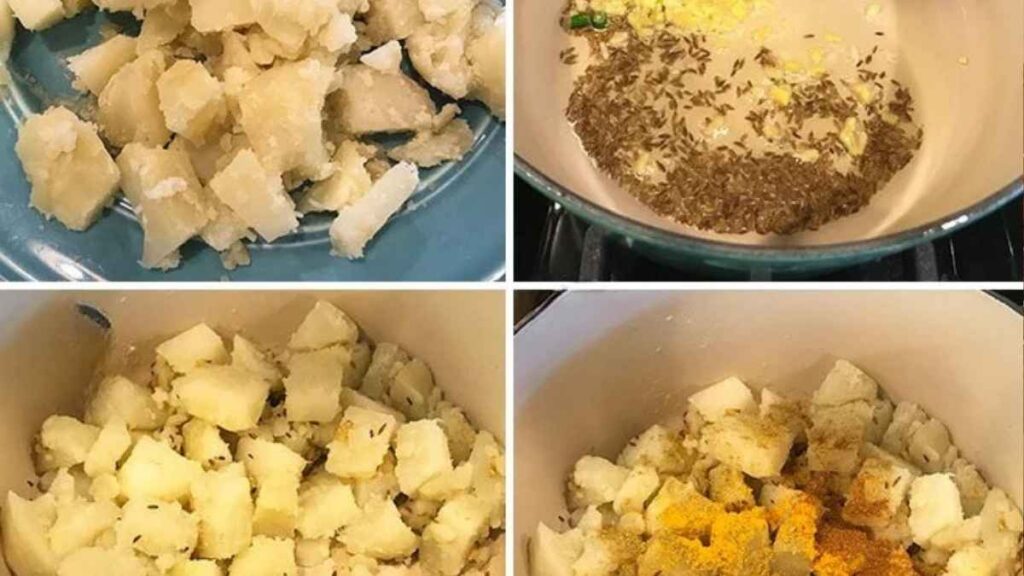
Add your crumbled potatoes to the tempered spices and toss everything together so each piece gets coated with the spiced ghee. Add sendha namak to taste. Stir gently for about a minute, letting the potatoes absorb the masala.
Time: 1-2 minutes
Step 5: Add the Curd Mixture
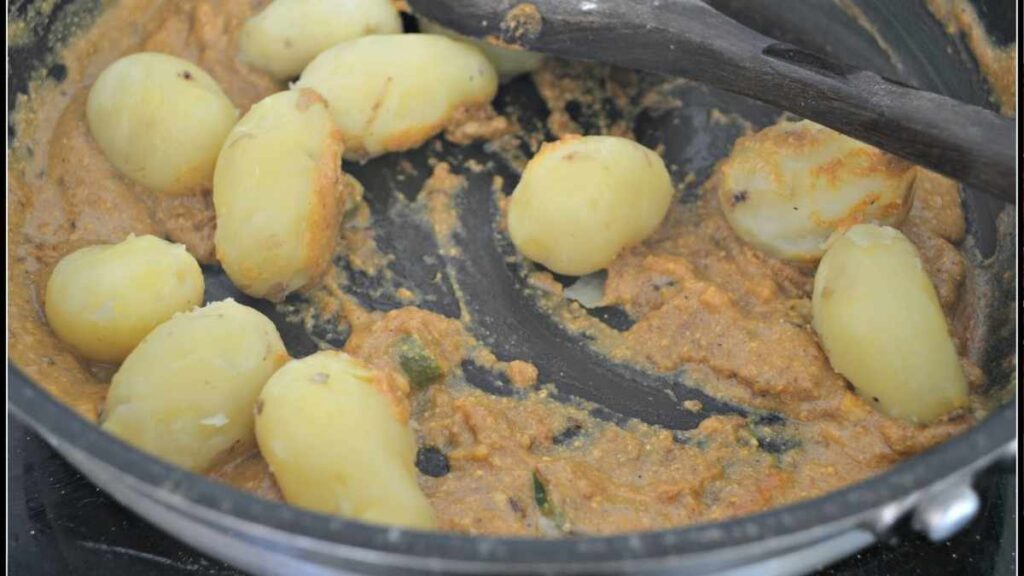
This is the most critical step. Reduce the heat to the lowest setting on your stove. Pour the whisked curd mixture slowly into the pan, stirring continuously as you add it. Don’t pour it all at once—add it in a slow, steady stream while your other hand keeps stirring.
The mixture will look thin at first. That’s fine. Keep the heat low and keep stirring. You’ll notice it start to thicken and come together as the besan cooks.
Time: 2-3 minutes
Step 6: Simmer Until Done
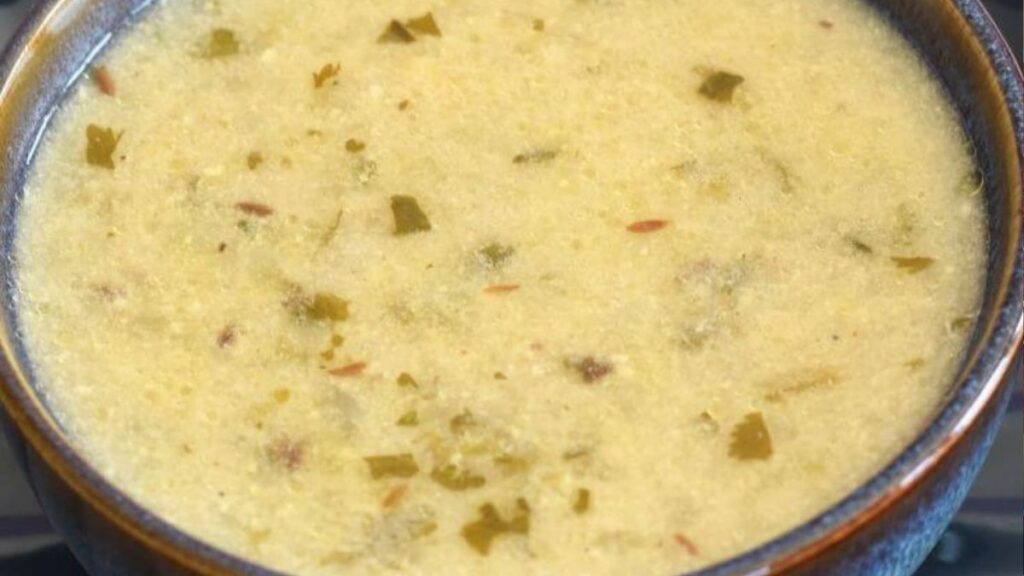
Once all the curd is incorporated and the gravy looks smooth, increase the heat very slightly to medium-low. Let it simmer gently for 8 to 10 minutes, stirring occasionally. The gravy will thicken to a semi-thick, kadhi-like consistency, and the potatoes will absorb the flavor of the curd and spices.
You’ll know it’s ready when the gravy coats the back of a spoon and the raw smell of besan has completely disappeared.
Time: 8-10 minutes
Step 7: Garnish and Serve
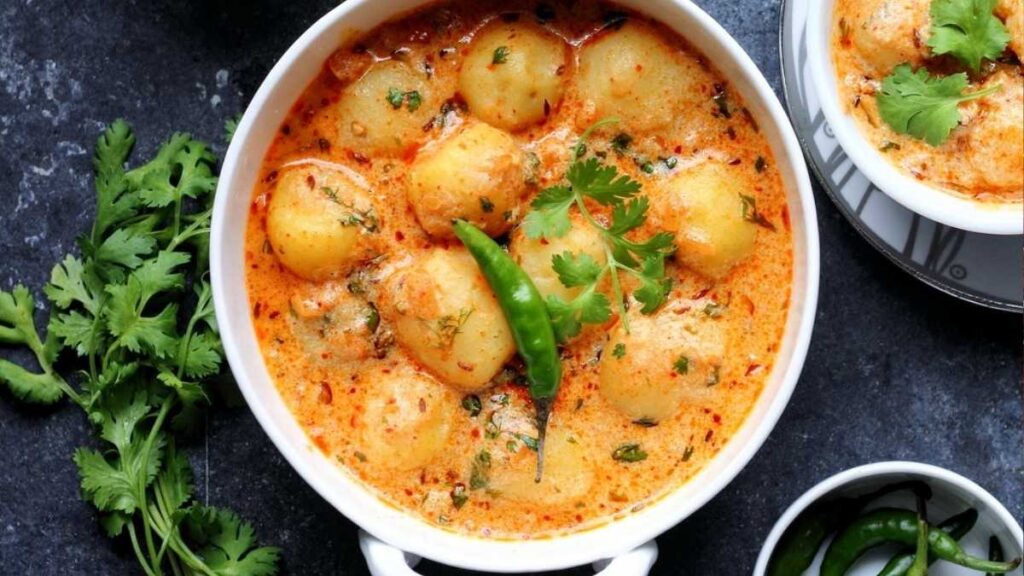
Turn off the heat. Taste and adjust salt if needed. Garnish with fresh chopped coriander and serve hot. Dahi aloo is best eaten immediately with kuttu ki puri or any fasting bread.
Time: 1 minute
Total Time: About 25 Minutes
Serving Suggestions
| Serve With | Why It Works |
|---|---|
| Kuttu ki puri | Classic Navratri pairing; crispy puri complements creamy gravy |
| Sama rice | Light, gluten-free combination for a complete meal |
| Singhare ka paratha | Alternative fasting bread option |
| Lauki ki sabji | Complete balanced thali |
| Plain curd on the side | Enhances probiotic content of the meal |
Dahi aloo is the kind of dish that anchors a Navratri thali. In UP households, it’s almost always paired with kuttu ki puri—the crispy, earthy puri scooping up the creamy yogurt gravy in the most satisfying way. Together, they form a complete meal: carbohydrates, protein, probiotics, and fat, all in one beautiful, vrat-compliant combination.
Storage and Make-Ahead Tips
| Storage Method | Duration | Notes |
|---|---|---|
| Refrigerated (airtight container) | Up to 2 days | Reheat on low flame with splash of water or ghee |
| Boiled potatoes only (frozen) | Up to 1 week | Freeze separately; prepare fresh gravy after thawing |
| Assembled dish (frozen) | Not recommended | Yogurt gravy changes texture significantly when frozen |
Dahi aloo is best eaten fresh, but it holds up reasonably well in the refrigerator for up to 2 days. When reheating, do it on low heat with a small splash of water to loosen the gravy, which thickens as it cools. A tiny bit of fresh ghee stirred in at the end brings it back to life.
If you want to prep ahead, boil the potatoes and freeze them for up to a week. Make the yogurt gravy fresh on the day you’re serving—it only takes about 15 minutes and the difference in quality is significant.
Why This Recipe Still Matters
In the landscape of Navratri fasting, dahi aloo occupies a special place. It’s not the most dramatic dish on the table. It doesn’t have the crispiness of kuttu ki puri or the sweetness of singhare ka halwa. But it’s the dish that holds the thali together—the warming, satisfying, quietly nourishing curry that makes everything else make sense.
There’s something almost poetic about combining two of the most humble ingredients in the Indian kitchen—potatoes and yogurt—and getting something so much more complex and comforting than either could achieve alone. The tanginess of the curd cutting through the starchiness of the potato. The warmth of the cumin and ginger making the whole thing feel like a hug in a bowl. The besan doing its invisible, essential work to keep everything smooth and together.
When you make dahi aloo during Navratri, you’re not just following a fasting recipe. You’re honoring a long tradition of North Indian home cooking that understood something important: that fasting food should nourish you completely, not just technically comply with the rules. That the nine days of Navratri deserve food that’s made with intention, care, and genuine knowledge of how ingredients work together.
Because sometimes the most ordinary ingredients, treated with a little patience and care, produce the most extraordinary results.
Why does my curd keep splitting in dahi aloo?
Splitting happens when yogurt hits high heat too quickly without a stabilizer. The solution is twofold: always whisk besan into the curd before adding it to the pan, and always cook on low heat while stirring continuously.
Can I make dahi aloo without besan?
Yes, but it’s riskier. If you’re avoiding besan for stricter fasting protocols, you can use the starchy water from boiling potatoes as a partial substitute—the potato starch provides some stabilization
How do I get the right gravy consistency?
It’s all about the besan-to-water ratio. For thicker, kadhi-style gravy, use 1½ teaspoons of besan and slightly less water.
