


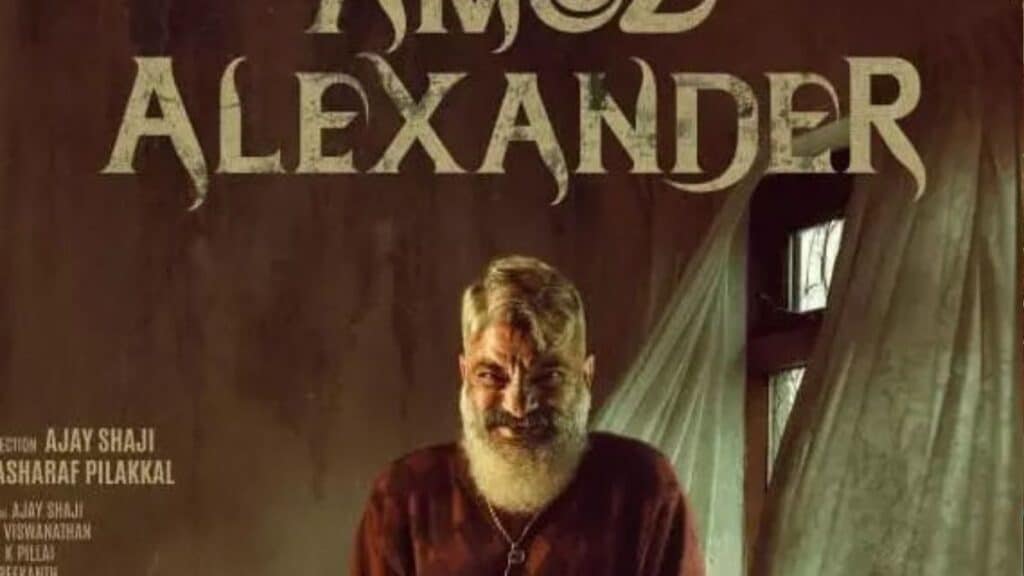
There are certain performances that make you watch films you wouldn’t otherwise finish. Performances so commanding, so unsettling in their restraint, that they become the only reason to endure weak writing, uneven pacing, and narrative drift. Jaffer Idukki’s work in Amos Alexander—the Malayalam psychological crime thriller streaming on Sun NXT from February 20, 2026—is exactly that kind of performance.
The premise is ambitious—exploring the ethics of profiting from criminal confessions, the psychology of perpetrators, and the moral compromises journalists make for content. At approximately 130 minutes, set largely in claustrophobic indoor spaces, the film attempts to create sustained psychological tension through dialogue-heavy confrontation.
Table of Contents
The Premise: Confession as Manipulation
The story revolves around Amoz Alexander, a convicted rapist-murderer serving time, who sends a confession email offering exclusive interviews. A journalist couple—played by Aju Varghese and Tara Amala Joseph—sees opportunity: true-crime content that could establish their careers. Mary (Joseph) takes the investigative lead, pursuing victims and context while her partner handles the interviews.
What they don’t anticipate is how Amoz will use these sessions not for confession but for continued control. The narrative unfolds largely in claustrophobic indoor settings—interview rooms, small apartments—heightening psychological tension as Amoz’s calm, restrained menace gradually destabilizes the journalists’ professional boundaries and personal lives.
The thematic core is morally complex: the film examines the ethics of profiting from criminal confessions, the exploitation inherent in true-crime media, and how perpetrators can weaponize their own stories even from prison. These are genuinely interesting questions that Malayalam cinema doesn’t often explore.
The execution, however, struggles to match the ambition. The research notes the film “attempts an ambitious exploration of guilt, redemption, and true-crime exploitation but receives mixed-to-negative critical responses.”
Film Overview
| Detail | Information |
|---|---|
| Title | Amos Alexander |
| Platform | Sun NXT, OTTplay Premium |
| Streaming Date | February 20, 2026 |
| Theatrical Release | November 2025 |
| Director | Ajay Shaji |
| Lead Actor | Jaffer Idukki (as Amoz Alexander) |
| Supporting Cast | Aju Varghese, Tara Amala Joseph |
| Runtime | 130 minutes (2 hrs 10 mins) |
| Language | Malayalam |
| Genre | Psychological Thriller, Crime Drama |
| Critical Average | 3.5/5 |
| Age Rating | Mature (violent themes, manipulation) |
What Works: One Performance and Ambitious Ideas
Despite significant weaknesses, Amos Alexander achieves several things worth acknowledging:
Jaffer Idukki’s career-defining performance. This is unanimous across all critical responses. The research states emphatically: “Jaffer Idukki’s performance is the film’s defining strength and primary reason to watch.”
This is the kind of work that transcends the film around it—the reason critics who disliked the screenplay still recommend watching for Idukki alone.
Strong central ethical premise. The research identifies the core thematic strength: “ethics of profiting from criminal confessions.” This examination of how media exploits tragedy for content, how journalists compromise ethics for access, and how perpetrators can manipulate even from confinement—these questions give the film intellectual weight.
Atmospheric cinematography in key scenes. While overall production receives mixed assessment, the research notes “occasional atmospheric cinematography enhances mood.” The claustrophobic indoor settings apparently work when the film focuses on psychological tension rather than plot mechanics.
Psychological tension in dialogue. The research notes: “Psychological tension works best in dialogue-heavy scenes.” When the film focuses on the interview dynamic—Amoz calmly destabilizing his interviewers—it apparently achieves genuine unease.
Bold attempt at difficult subject matter. The research acknowledges this as a “bold attempt to examine perpetrator psychology in Malayalam cinema”—meaning the film deserves credit for tackling uncomfortable material that regional cinema typically avoids.
The critical assessment: “Ambition and performance elevate an otherwise uneven screenplay.”
CHECK MORE ON:Mana Shankara Vara Prasad Garu Trailer Review
What Doesn’t Work: Screenplay, Pacing, and Emotional Flatness
Mid-section narrative drift. The research notes: “Mid-section narrative drift noted across reviews.” The film apparently loses focus and momentum during its middle portions, struggling to maintain the tension established early.
Flat emotional beats. The research is specific: “Emotional beats described as flat or inconsistent.” For a psychological thriller that depends on emotional stakes, this is a fundamental failure.
Supporting characters underwritten. The research notes: “Supporting performances (Aju Varghese, Tara Amala Joseph) receive mixed reactions due to underwritten arcs” and specifically that “Emotional depth for Mary’s character reportedly underdeveloped.”
Cast and Performances
Jaffer Idukki as Amoz Alexander
This is the film’s unequivocal triumph. Idukki creates a villain who works through restraint—unsettling calm rather than explosive rage, layered manipulation rather than obvious menace. The research emphasizes he “avoids caricature” while delivering “layered villainy.”
Aju Varghese
Receives mixed assessment due to underwritten material. The character apparently lacks the development needed to make his arc compelling.
Tara Amala Joseph as Mary
Similarly limited by screenplay. The research specifically notes her investigative role—pursuing victims for context—should carry emotional weight, but the “emotional depth for Mary’s character reportedly underdeveloped.”
The ensemble suffers from what plagues the entire film: interesting ideas undermined by weak execution.
Direction and Technical Craft
Ajay Shaji (Director)
Attempts ambitious psychological territory but struggles with pacing and emotional consistency. The research notes the film “blends confession drama, media ethics, and psychological manipulation”—showing thematic ambition—but execution doesn’t match conception.
Cinematography
“Occasional atmospheric cinematography enhances mood”—meaning it works in specific scenes but isn’t consistently strong throughout.
Setting
The “claustrophobic indoor settings” apparently work to “heighten psychological tension” when the screenplay supports them.

One Performance Can’t Save Uneven Execution
Amos Alexander is a film defined by the gap between its ambitions and its achievements. The premise—journalists interviewing a convicted criminal whose confession becomes manipulation—raises genuinely interesting questions about media ethics, true-crime exploitation, and perpetrator psychology. Jaffer Idukki delivers a chilling, career-defining performance that creates sustained unease through restraint and layered villainy.
But strong ideas and one extraordinary performance can’t compensate for fundamental screenplay weaknesses. The emotional arcs are flat. The supporting characters are underwritten. The mid-section loses focus and momentum. The finale doesn’t deliver on the buildup. The 130-minute runtime includes significant pacing issues that test patience.
The critical consensus averaging 3.5/5 reflects honest assessment: this is ambitious but flawed cinema that succeeds primarily as a showcase for Idukki’s talents while failing to execute its thematic ambitions satisfyingly.
For viewers who can tolerate weak screenplay for compelling central performance, Amos Alexander offers value. For those who need consistent quality throughout or satisfying narrative resolution, the film frustrates more than it rewards.
Overall Rating: 3.5/5
An ambitious psychological thriller anchored by Jaffer Idukki’s chilling performance but undermined by uneven writing and emotional flatness. Worth watching for the central performance; prepare for disappointment elsewhere.
Now streaming on Sun NXT and OTTplay Premium.
Is Amos Alexander appropriate for family viewing?
No. The film deals with mature themes including rape, murder, and psychological manipulation.
Is Jaffer Idukki’s performance really worth watching the film for?
According to critical consensus, yes—but with caveats. The research states his performance is “the film’s defining strength and primary reason to watch”
