


When Sivakarthikeyan announced Parasakthi, a period political drama set against the backdrop of 1965 Tamil Nadu, it immediately caught attention. Not because of star power alone, but because of what it represents—a chapter of history that still echoes in the cultural consciousness of Tamil Nadu. The film revisits the anti-Hindi imposition movement, a defining moment when students took to the streets, demanding linguistic autonomy and cultural dignity.
But how much of Parasakthi is rooted in actual events? And what makes this story still relevant six decades later?
Quick Answer:
Yes and no. Parasakthi is a fictionalized political drama inspired by the real 1965 anti-Hindi protests in Tamil Nadu. While the characters and their personal journeys are dramatized, the socio-political backdrop—student-led demonstrations, police crackdowns, and tragic deaths—is historically accurate. The protagonist is believed to be loosely based on R. Rajendran, an Annamalai University student killed during the protests.
The smoke-filled streets of Madras. The defiant chants of students refusing to back down. The crack of police lathi charges echoing through university campuses. Parasakthi drops you into the heart of 1965 Tamil Nadu, where the simple act of defending your mother tongue could cost you your life. As Sivakarthikeyan’s character stands at the crossroads of history, audiences can’t help but wonder: did this really happen?
Tamil cinema has always had a gift for making history breathe. Remember Jai Bhim? A searing courtroom drama that forced us to confront uncomfortable truths about caste and justice. Or Soorarai Pottru, which turned the story of a man’s aviation dreams into a celebration of defiance against the odds? Parasakthi walks that same tightrope, blurring the lines between historical fact and cinematic storytelling.
But here’s what makes this different—Tamil Nadu’s past isn’t just filled with stories. It’s drenched in the blood and sweat of young people who refused to let their language be erased.
Check Out: Parasakthi Movie Review: Sivakarthikeyan’s Powerful Period Drama
The Real Fire Behind the Reel Drama
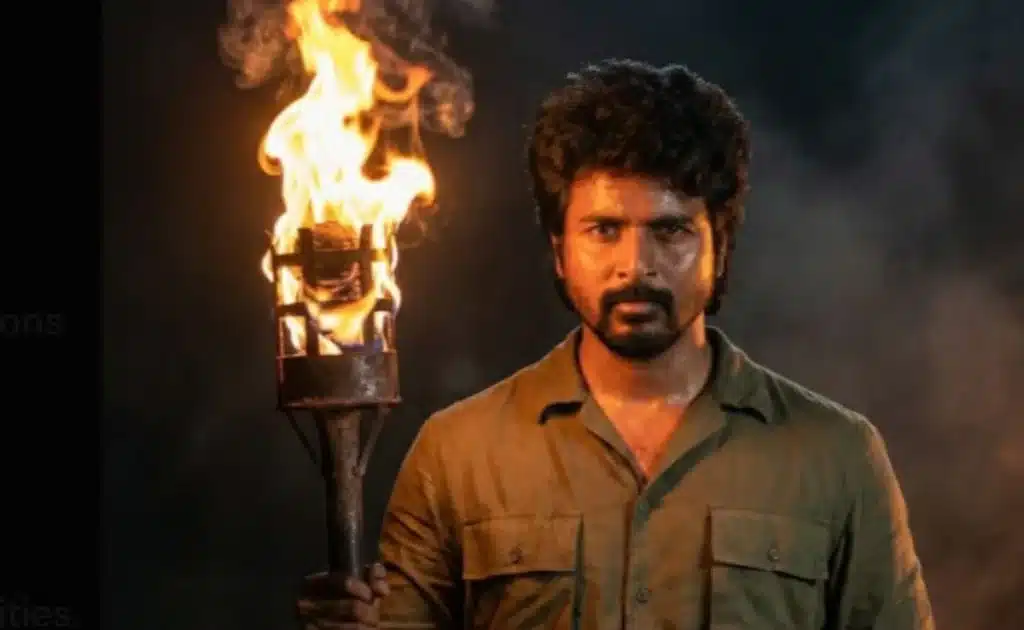
Tamil Nadu has a history of standing up when it feels cornered. And 1965? That was the year the state drew a line in the sand. January 26, 1965, wasn’t just another Republic Day. It was the day Hindi was set to replace English as India’s sole official language, leaving regional languages like Tamil vulnerable to marginalization.
What followed was an explosion of student-led protests across the state. Universities became battlegrounds. Young people walked out of classrooms, not with textbooks, but with placards and slogans. They weren’t career activists or seasoned politicians. They were ordinary students who believed their language—their identity—was worth fighting for.
The protests weren’t peaceful for long. Police crackdowns were swift and brutal. Lathi charges. Arrests. And in some cases, bullets. Several young protestors lost their lives, their names etched into Tamil Nadu’s political memory as martyrs who paid the ultimate price.
Could Parasakthi have drawn from this turbulent chapter? The parallels are impossible to miss.
The Story Behind Sivakarthikeyan’s Character
While director Sudha Kongara has been clear that Parasakthi is a work of fiction, the character Sivakarthikeyan plays is widely believed to be inspired by R. Rajendran, a student at Annamalai University. During the height of the 1965 protests, Rajendran was shot dead when police opened fire on demonstrators.
His death wasn’t just a statistic. It became a rallying cry. Rajendran’s story embodied the courage of a generation that refused to be silenced—even when silence could have saved their lives. His name became synonymous with resistance, a reminder that some things are worth more than survival.
The film’s protagonist feels like him. The quiet resolve. The sudden radicalization when faced with injustice. The tragic end that transforms a person into a symbol. It’s as if Kongara took the scattered memories of 1965 and gave them a face, a voice, a heartbeat.
What Makes It Feel So Achingly Real?
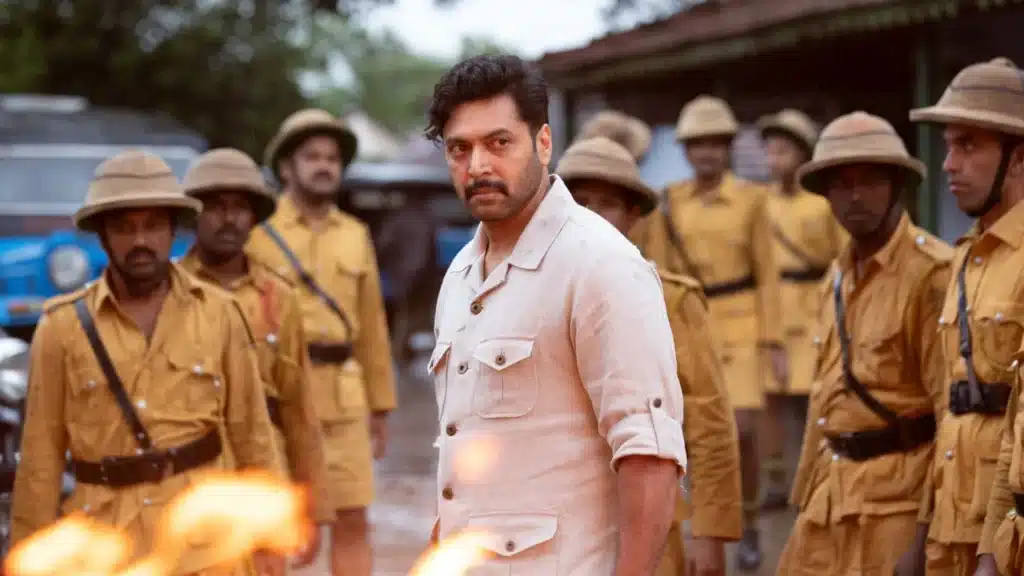
Sudha Kongara is known for her meticulous attention to detail. In Parasakthi, every frame feels weighted with history. The way students gather in hushed groups, debating their next move. The fear in their eyes when police vans roll onto campus. The defiance that overtakes that fear when they realize there’s no turning back.
And then there’s the setting: Tamil Nadu in 1965, a state caught between tradition and change, between pride and pragmatism. The film captures that tension—the way language wasn’t just a means of communication but a vessel for culture, history, and identity.
It’s the kind of authenticity that makes you forget you’re watching a film. You’re not just observing history. You’re living it.
Is Parasakthi the Next Jai Bhim?
Tamil cinema has a tradition of holding up mirrors to uncomfortable truths. Jai Bhim forced conversations about systemic oppression. Karnan explored caste and land rights. Soorarai Pottru celebrated the entrepreneurial spirit against crushing odds. Parasakthi fits into this lineage, asking a question that still resonates: what are you willing to sacrifice for your identity?
The film’s characters feel like people you’d meet in your own family. The student torn between dreams of a stable future and the moral imperative to protest. The parents begging their children to stay safe. The police officers caught between duty and conscience. These aren’t caricatures. They’re echoes of real people who lived through real choices.
So, Is It Based on a True Story?
Here’s the honest answer: Parasakthi isn’t a direct retelling of any one person’s story. The characters are fictionalized. Their personal arcs are dramatized. But the backdrop? That’s as real as it gets.
The 1965 anti-Hindi protests happened. Students died. Families mourned. A movement was born that would reshape Tamil Nadu’s political identity for decades. The film doesn’t need to name names or recreate events down to the minute. It’s inspired by the collective memory of a struggle that still defines how Tamil Nadu sees itself.
Parasakthi isn’t about one true story. It’s about the truth behind many stories—the anger, the fear, the courage, and the cost of standing up for what you believe in.
Why This Story Still Matters
You might wonder why a film about events from 1965 feels urgent in 2026. Because the questions it raises haven’t disappeared. How do you preserve your culture in a world that pushes homogenization? What happens when identity becomes a political battleground? How far would you go to protect your language, your heritage, your sense of self?
For Tamil audiences, especially those old enough to remember the protests or who grew up hearing stories from parents and grandparents, Parasakthi is more than a period drama. It’s a validation of a struggle that’s often minimized in national narratives.
For the diaspora navigating life between languages and cultures, the film’s core conflict resonates deeply. Many of us know what it feels like to watch our mother tongue slowly slip away in favor of English or another dominant language. We understand the quiet grief of losing cultural touchstones, the anxiety of whether our children will carry forward what we hold dear.
Parasakthi reminds us that this battle isn’t new. And it’s never been easy.
The Bigger Picture
The 1965 protests succeeded in many ways. Hindi wasn’t imposed as the sole official language. Tamil retained its official status. The movement proved that grassroots mobilization could shift national policy, that student voices mattered, that linguistic diversity was non-negotiable in a multilingual democracy.
But the film also forces us to reckon with the cost. The young people who marched didn’t know if they’d win. They didn’t have the benefit of hindsight. They just knew that some things couldn’t be compromised on, even if it meant risking everything.
That kind of conviction—raw, passionate, and deeply human—is what Parasakthi tries to capture. Not as a sanitized history lesson with heroes and villains neatly categorized, but as a messy, complicated reflection of what happens when ordinary people are pushed to extraordinary acts.
What Tamil Cinema Does Best
This is what makes Tamil cinema so powerful. It doesn’t just entertain. It excavates. It unearths stories that need to be told, even when they’re uncomfortable. It refuses to let history be reduced to footnotes in textbooks.
Parasakthi might not be a frame-by-frame recreation of actual events, but it is inspired by the spirit of a movement that changed Tamil Nadu forever. It’s a tribute to the students who believed their language was worth defending. To the families who lost children to a cause larger than any one life. To a generation that refused to be erased.
Parasakthi might not be based on one true story. But it’s rooted in a truth that’s bigger than any single narrative—the truth that identity is never given. It’s fought for. And sometimes, it’s died for. That’s what makes the film feel so hauntingly, achingly real.
