


When the sun begins its northward journey and winter starts loosening its grip, millions across India look skyward—some to fly kites, others to offer prayers, many to gather around steaming pots of sweet Pongal or til ladoos. Makar Sankranti isn’t just one festival; it’s a constellation of celebrations under different names, each region adding its own flavor while honoring the same truth: the sun is returning, the harvest is in, and brighter days are ahead.
Quick Summary:
Makar Sankranti, celebrated around January 14-15, marks the sun’s transition into Capricorn and the beginning of longer days. Known as Pongal in Tamil Nadu, Uttarayan in Gujarat, and Bihu in Assam, the festival celebrates harvest, sun worship, and new beginnings across India.
Table of Contents
What Is Makar Sankranti and Why Is It Celebrated?
Makar Sankranti marks one of the rare Indian festivals tied to the solar calendar rather than the lunar one, falling on January 14th or 15th when the sun enters the Capricorn (Makara) zodiac sign. This astronomical event, called Uttarayan, signals the sun’s northward movement—a shift that brings longer days, warmer weather, and the promise of spring after winter’s cold.
For farming communities, this timing is everything. The winter crops—wheat, sugarcane, rice, turmeric—are ready for harvest. Granaries are full, hard work has paid off, and there’s reason to celebrate abundance. The festival becomes a collective exhale, a moment to thank the sun god Surya for sustaining life and to express gratitude for nature’s generosity.
But beyond agriculture, Makar Sankranti carries deeper spiritual weight. In Hindu cosmology, Uttarayan is considered an auspicious period—the six months when the sun travels north are believed to be favorable for spiritual practices, new beginnings, and positive transformations. The day itself is seen as highly propitious for rituals, prayers, and holy baths that purify the soul.
The Many Names of Makar Sankranti Across India
What makes Makar Sankranti fascinating is how it shape-shifts across regions, taking on different names, customs, and flavors while maintaining its essential character. A festival in Tamil Nadu looks nothing like one in Gujarat, yet both are celebrating the same solar transition.
In Tamil Nadu, it’s Pongal—a four-day celebration where the sweet rice dish also called Pongal is cooked in new pots, allowed to overflow as a symbol of abundance. In Gujarat and Rajasthan, it becomes Uttarayan, synonymous with kite-flying competitions that turn the sky into a canvas of color. In Assam, Magh Bihu (or Bhogali Bihu) brings bonfires, feasts, and community gatherings. Punjab celebrates Maghi with holy dips and langars at gurdwaras. In Uttar Pradesh and Bihar, it’s known as Khichdi, named after the dish of rice and lentils offered to deities.
Each name reflects local culture, but the thread connecting them all is gratitude—for the sun’s return, for the harvest, for the chance to begin again.
Pongal: Tamil Nadu’s Four-Day Harvest Festival
In Tamil Nadu, Pongal isn’t just a day; it’s a four-day celebration that honors the sun, cattle, rain, and community. The festival typically runs from January 14-17, with each day holding distinct significance.
Bhogi Pongal (Day 1) is about letting go—old belongings are discarded or burned in bonfires, symbolizing the release of the past and making space for the new. Homes are cleaned, repainted, and decorated with fresh kolam designs made from rice flour at the entrance.
Surya Pongal (Day 2) is the main event. Families cook the sweet Pongal dish—newly harvested rice boiled with moong dal, jaggery, milk, and ghee in earthen or brass pots—outdoors in sunlight. The moment the mixture boils over, everyone shouts “Pongalo Pongal!” celebrating abundance. The overflowing pot is no accident; it’s deliberate, a visual prayer for prosperity.
Mattu Pongal (Day 3) honors cattle—the backbone of agricultural life. Cows and bulls are bathed, their horns painted in bright colors, adorned with flower garlands and bells. Families feed them special treats and offer thanks for their role in farming. In some areas, traditional bull-taming events (Jallikattu) take place, though these remain controversial.
Kaanum Pongal (Day 4) is for community and family outings. Siblings pray for each other’s well-being, families visit beaches or temples, and the festival gently winds down with a sense of renewal and connection.
Traditional Pongal Dish Recipe Highlights
- Main ingredients: Raw rice, moong dal, jaggery, milk, ghee, cardamom, cashews, and raisins
- Sacred preparation: Cooked outdoors in sunlight, preferably in clay pots
- The overflow moment: When it boils over, it symbolizes abundance and prosperity
- Offering ritual: First portion offered to Surya before the family eats
Uttarayan: Gujarat’s Sky Full of Kites
If Pongal is about cooking and cattle, Uttarayan in Gujarat is about the sky. From dawn until well after sunset, the skies over Ahmedabad, Surat, and every town and village fill with kites—diamonds, boxes, birds, every shape imaginable, their strings taut, their colors brilliant against the winter sky.
Kite flying on Makar Sankranti isn’t just recreation; it’s tradition with meaning. Being outdoors in winter sunlight after months of cold is believed to be healing—the sun’s rays provide Vitamin D and warmth. The activity brings communities together on rooftops, where neighbors compete, laugh, and share food. The battle cry of “Kai Po Che!” (I’ve cut it!) rings out whenever someone cuts another’s kite string.
The night doesn’t end the celebration—it transforms it. Uttarayan becomes International Kite Festival, where illuminated kites and lanterns float upward, turning darkness into something magical. Rooftops host parties with undhiyu (mixed vegetable dish), jalebi, chikki (peanut brittle), and endless chai.
For Gujaratis living abroad, Uttarayan carries extra weight. Community groups organize kite-flying events in parks, importing proper Indian kites and manjha (glass-coated string), teaching kids the technique, and recreating the rooftop atmosphere even if it means adapting to different weather and spaces.
Uttarayan Kite Flying Traditions
- Patang (kite) types: Traditional diamond-shaped kites in bright colors and patterns
- Manjha: Special glass-coated string used for kite battles
- Rooftop culture: Families and neighbors gather on terraces for all-day celebrations
- Food staples: Undhiyu, chikki, jalebi, til ladoos, and masala chai
- Tukkals: Illuminated kites flown at night with lanterns attached
Magh Bihu: Assam’s Feast and Fire Festival
In Assam, Magh Bihu (also called Bhogali Bihu, from “bhog” meaning feast) transforms Makar Sankranti into a celebration of food, fire, and community. The festival marks the end of the harvesting season, and true to its name, it’s all about abundance—cooking, eating, and sharing.
The night before the main day, communities build meji—tall structures made from bamboo, hay, and wood in open fields. Young people spend the night in temporary huts called bhelaghar, eating traditional foods, singing, and staying warm around fires. At dawn, the meji is set ablaze in a dramatic ritual, with people throwing in rice cakes (pithas) and offering prayers as the flames rise.
The food is central—every household prepares various pithas (rice cakes) including til pitha, ghila pitha, and sunga pitha (rice cooked in bamboo tubes). There’s laru (coconut ladoos), doi (yogurt), and freshly harvested vegetables. Community feasts called bhojs bring everyone together, reinforcing bonds and shared identity.
Magh Bihu Traditional Foods
- Til pitha: Sesame-filled rice pancakes
- Sunga pitha: Rice cooked inside bamboo tubes over fire
- Laru: Sweet coconut ladoos
- Chira, doi, gur: Flattened rice with yogurt and jaggery
- Fresh harvest vegetables: Prepared in traditional Assamese styles
Holy Baths and Spiritual Significance
Across North India, Makar Sankranti brings millions to riverbanks, particularly the Ganges in Prayagraj (Allahabad), Varanasi, and Haridwar. Taking a holy dip at sunrise on this day is believed to wash away sins and bring spiritual merit. The Kumbh Mela, when it occurs, also aligns with Makar Sankranti, drawing even larger crowds.
The rivers themselves are considered especially sacred during Uttarayan. The belief is that bathing in holy waters during this auspicious time purifies not just the body but the soul, removing negative karma and opening pathways for spiritual growth. Pilgrims often carry back bottles of Ganga water, considered blessed and used for various ceremonies throughout the year.
After the bath, many offer tarpan (water offerings) to ancestors and the sun god, and donate food, clothes, or money to those in need. The act of giving on Makar Sankranti is considered highly auspicious—whether it’s feeding Brahmins, distributing sweets to neighbors, or donating to the poor.
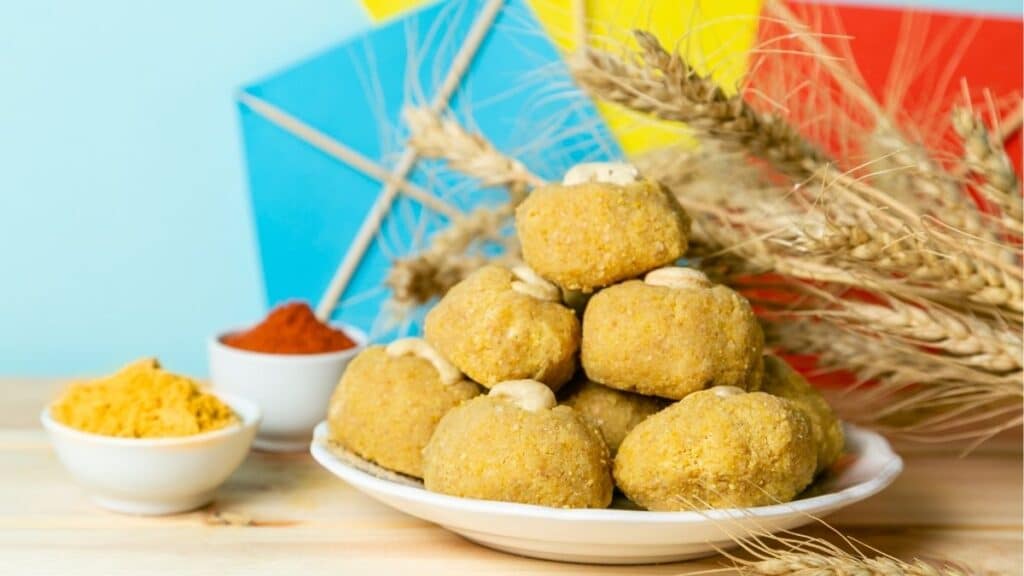
Traditional Foods: Til and Gud Across India
If there’s one ingredient that unites Makar Sankranti celebrations across regions, it’s til (sesame seeds), usually combined with gud (jaggery). These winter ingredients aren’t just tasty—they’re nutritionally perfect for the season, providing warmth, energy, and essential fats when the body needs them most.
In Maharashtra and Karnataka, people exchange til-gud ladoos with the phrase “til-gud ghya, god god bola” (take this sesame and jaggery, and speak sweet words), turning the food into a reminder of kindness. In Rajasthan, women sing folk songs while gifting til-gud to daughters-in-law. Bihar and Uttar Pradesh prepare khichdi (rice and lentil dish) and chura-dahi (flattened rice with yogurt).
The symbolism is deliberate—sesame seeds stick together like family bonds, and jaggery’s sweetness represents the words we should speak to each other. The food becomes a lesson in values, passed from one generation to the next through taste and tradition.
Regional Makar Sankranti Foods
Maharashtra:
- Til-gud ladoos and chikki
- Puran poli (sweet flatbread)
- Kites and outdoor gatherings
Karnataka:
- Ellu-bella mixture (sesame, peanuts, jaggery, coconut)
- Sugarcane and harvested produce exchange
- “Ellu birodhu, yellaru olle irali” (give sesame, let everyone be well)
Punjab:
- Khichdi with ghee
- Makki di roti and sarson da saag
- Langar at gurdwaras
Uttar Pradesh & Bihar:
- Khichdi offered to deities
- Til ladoos and rewri
- Dahi-chura (yogurt with flattened rice)
Makar Sankranti for the Diaspora: Keeping Traditions Alive Abroad
For Indian families living outside India, Makar Sankranti presents unique challenges and opportunities. The festival’s outdoor nature—kite flying, bonfires, holy river baths—doesn’t always translate to apartments in New York or winter in Toronto. Yet communities find ways to adapt, creating their own versions of tradition.
Temples and cultural centers organize events where families can participate in scaled-down rituals, cook traditional foods together, and teach children about the festival’s significance. In places with milder climates, kite-flying events happen in parks, even if the kites are store-bought and the manjha is regular string. The important part isn’t perfect replication—it’s the intention to pass something meaningful forward.
For second-generation kids, these celebrations become markers of identity. They might not understand why flying kites matters or why sesame and jaggery are significant, but they remember the community gathered, the laughter, the taste of til ladoos their grandmother made. These sensory memories become anchors to heritage, especially in multicultural environments where “Indian” might feel abstract without concrete traditions to hold onto.
The festival also becomes an opportunity to share culture with non-Indian friends and neighbors. Explaining why everyone’s flying kites or why you’re eating khichdi today opens conversations, builds bridges, and turns personal tradition into something others can appreciate and respect.
How to Celebrate Makar Sankranti: Modern Ideas
For families wanting to observe traditions:
- Holy bath ritual: If near a river, take a dip at sunrise; otherwise, add sacred intention to your morning shower
- Cook traditional foods: Make til ladoos or khichdi, involving kids in preparation
- Fly kites: Find an open space and fly kites with family—it’s joyful and meaningful
- Sunrise prayers: Offer water to the sun god at sunrise with gratitude
- Donate and share: Give food, clothes, or money to those in need
- Create kolam/rangoli: Decorate your entrance with traditional floor art
- Learn regional variations: Explore how different Indian states celebrate the same festival
For celebrating abroad:
- Community gatherings: Join local temple or cultural organization events
- Virtual connections: Video call family in India during their celebrations
- Food traditions: Cook and share traditional dishes with neighbors
- Cultural education: Teach children about the festival’s meaning and regional variations
- Adapted celebrations: Even small rituals—lighting a candle, making one dish, explaining the festival—count
What is Makar Sankranti?
Makar Sankranti is a harvest festival marking the sun’s entry into Capricorn and its northward journey, celebrated across India with regional variations.
When is Makar Sankranti 2026?
Makar Sankranti falls on January 14, 2026 in most parts of India.
Why do we celebrate Makar Sankranti?
To honor the harvest, worship the sun god Surya, mark the end of winter, and celebrate new beginnings during the auspicious Uttarayan period.
