


In this Mardaani 3 movie review, we explore a film that arrives with the moral urgency of a battle cry in today’s cinema landscape. When was the last time you watched a mainstream Bollywood film that refused to look away from uncomfortable truths while still delivering edge-of-your-seat entertainment? Mardaani 3 doesn’t just continue a franchise; it strengthens its legacy by tackling human trafficking with unflinching honesty and fierce conviction.
Director Abhiraj Minawala steps into demanding territory with the confidence of someone who understands that this franchise has always been about more than just action—it’s about justice, accountability, and the voices that society tries to silence. This is Rani Mukerji’s most authentic, unpolished performance in the series, supported by a stellar ensemble that elevates every frame. With Mallika Prasad delivering a chilling antagonist worthy of the franchise’s intimidating villain legacy and cinematography that functions as an unflinching witness to harsh realities, Mardaani 3 is the cinematic equivalent of a necessary wake-up call wrapped in gripping entertainment.
Quick Takeaway:
Mardaani 3 is a technically accomplished, emotionally resonant social thriller that succeeds brilliantly in balancing entertainment with important commentary. Though the narrative follows familiar thriller patterns, the film’s raw authenticity, powerful performances, and that searing social critique make it essential viewing for anyone who believes cinema can spark conversations while entertaining.
Language: Hindi
Genre: Social Thriller, Crime Drama, Action
Director: Abhiraj Minawala
Release Date: January 30, 2026
Runtime: 2 hours 9 minutes
The Plot: A Race Against Time and Systemic Indifference
At its core, Mardaani 3 is a thriller about human trafficking—but calling it just that would be like describing a hurricane as “some weather.” The film’s brilliance lies in its dual focus: tracking down traffickers while exposing the system that enables them through selective attention and convenient blindness.
Shivani Shivaji Roy (Rani Mukerji) faces her most complex challenge yet: dismantling a sprawling human trafficking network run by Amma (Mallika Prasad), a queenpin whose operation drugs young girls across cities and states. But Roy isn’t just fighting criminals—she’s battling institutional apathy that treats missing poor children as statistics while mobilizing instantly when an influential man’s daughter disappears.
The beauty of this approach is how it illuminates systemic failures without ever becoming preachy. When you’re watching Roy navigate bureaucratic obstacles and societal indifference, the frustration feels visceral and real. The film shows us a system that bends instinctively toward power and wealth, creating a more complex villain than any single antagonist could provide.
Check Out: Mardaani 3 Release Date, OTT Platform & Everything About Rani Mukerji’s Action Thriller
What makes the narrative structure work so effectively is its perfect pacing. At 2 hours and 9 minutes, every scene serves purpose—building tension, revealing character, or advancing the investigation. The film never loses momentum, keeping audiences invested from the first frame to the powerful conclusion.
Performances: Every Actor Brings Authenticity and Power
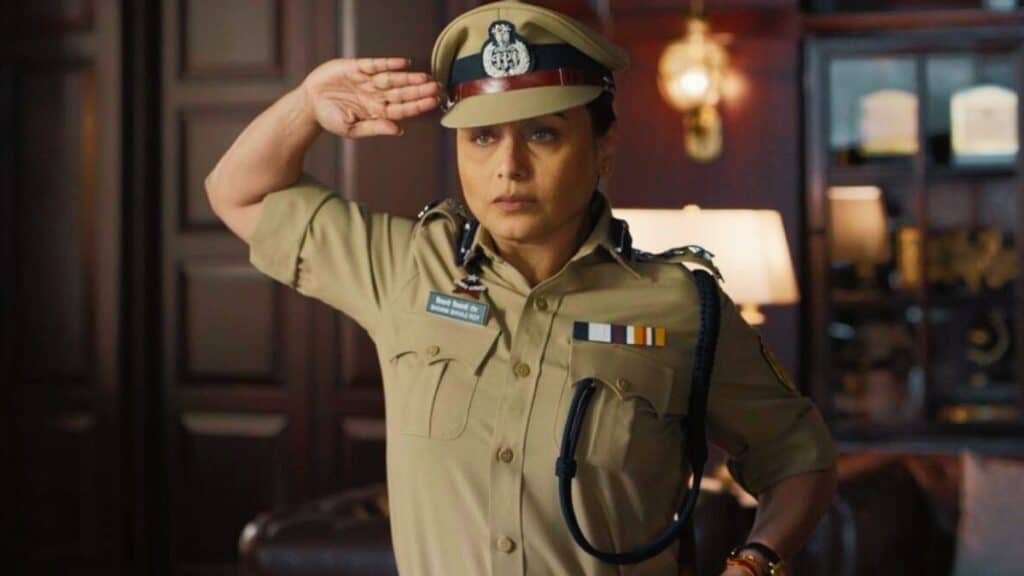
Rani Mukerji: Raw, Unfiltered Excellence
This Mardaani 3 movie review must begin with the obvious: Rani Mukerji delivers her most authentic portrayal of Shivani Shivaji Roy yet. After two films establishing the character, she now inhabits Roy with the ease of someone who knows this woman inside out—her instincts, her moral code, her unwavering determination.
Watch her in scenes where exhaustion shows not through dramatic acting but through visible freckles, unhidden dark circles, and body language that speaks to countless sleepless nights. This isn’t a polished, glamorized version of a female cop—this is the real deal, markers of exhaustion that thousands of officers experience daily. Rani doesn’t hide behind makeup or vanity; she presents a woman functioning as a one-woman force against overwhelming odds.
The intensity in her eyes during confrontations, the sharp instinctive reactions, the way she rarely waits for permission—Rani brings fierce assurance to every moment. This is an actress at the peak of her powers, completely committed to authentic representation over commercial appeal.
Mallika Prasad: A Formidable Force as Amma
Every great hero needs an equally compelling antagonist, and Mallika Prasad delivers exactly that. Her Amma joins the franchise’s intimidating legacy alongside Vishal Jethwa (2019) and Tahir Raj Bhasin (2014)—villains who felt disturbingly real and untouched by typical Bollywood theatrics.
What makes Mallika’s performance exceptional is the layers she brings to what could have been a one-dimensional villain. Amma isn’t born monstrous; she’s molded by a system that rewards cruelty and punishes vulnerability. Mallika shows us how survival in harsh circumstances can harden someone into something fearless and ruthless. The result is a character who’s terrifying precisely because we understand how she got there.
Her scenes with Rani crackle with tension—two strong-willed women on opposite sides of morality, both unwavering in their beliefs, both products of the same broken system.
Janki Bodiwala: The Emotional Anchor
Janki Bodiwala delivers a sharp, assured performance that adds crucial emotional depth to the narrative. In scenes requiring shared emotional weight rather than individual heroism, she occasionally matches—and sometimes outshines—even Rani. This isn’t a criticism of anyone; it’s testament to how well the ensemble works together.
Her character represents the human cost of trafficking, grounding the thriller elements in genuine tragedy. Janki handles these demanding scenes with maturity and restraint, never overplaying the emotion but letting it resonate naturally.
The Supporting Ensemble: Strength in Every Role
The supporting cast understands that authentic performances elevate everything. Each actor brings lived-in quality to their roles, creating a world that feels textured and real rather than manufactured for drama. From law enforcement colleagues to victims’ families, every character serves the larger narrative purpose while maintaining individual dignity.
Direction and Vision: Abhiraj Minawala’s Assured Hand
Abhiraj Minawala takes on the significant responsibility of continuing a beloved franchise and succeeds admirably. His directorial approach balances respect for what came before with his own vision of what the story needs to be.
What’s particularly impressive is Minawala’s restraint. In an era of overwrought action sequences and manufactured drama, he keeps Mardaani 3 grounded and purposeful. The action feels incidental rather than designed for spectacle—violence is consequential, never glorified. When confrontations happen, they carry emotional weight because we understand what’s at stake.
The film’s heart is unmistakably in the right place, and Minawala ensures that moral clarity never compromises entertainment value. He’s made a film that’s angry in the right places, urgent where it matters, and driven by conviction that refuses to soften for commercial comfort. The social commentary hits hard because it’s woven into character and story rather than delivered through heavy-handed speeches.
His handling of the ensemble is particularly skillful. Despite Rani’s commanding presence, Minawala ensures that Janki Bodiwala and Mallika Prasad get moments to shine. This isn’t a one-woman show supported by background players; it’s a genuine ensemble piece where every performance matters.
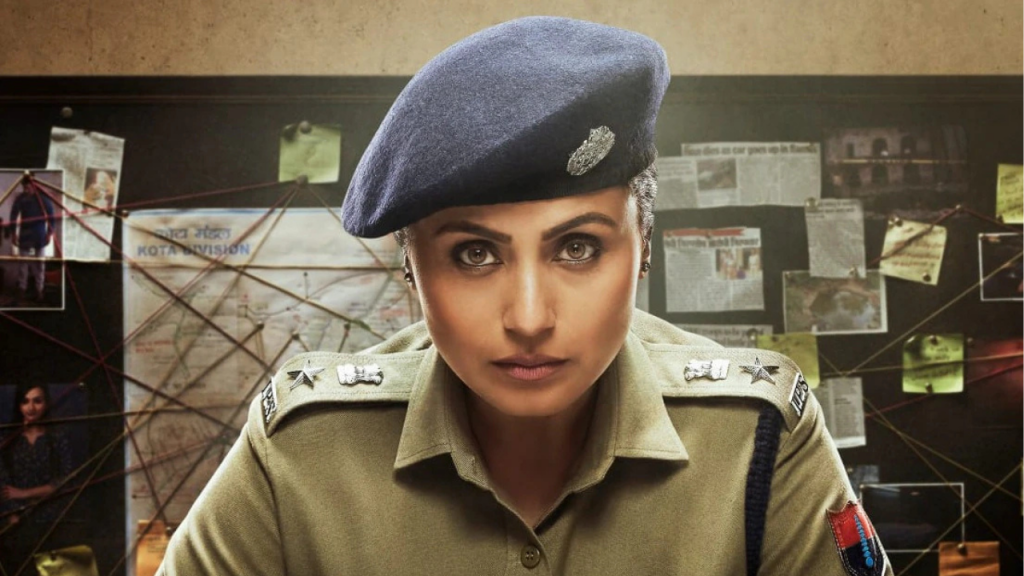
Technical Brilliance: Craft That Serves the Story
Cinematography: An Unflinching Witness
The visual language of Mardaani 3 deserves special recognition. The camera functions as an unflinching witness, guiding viewers through neglected alleys and forgotten corners where trafficking thrives because no one is looking. There’s documentary-like honesty to the visual approach—no beautification of suffering, no aestheticizing of violence.
What’s remarkable is how the cinematography maintains this gritty realism while still creating visually compelling frames. The film looks polished and professional without ever feeling sanitized. Colors are naturalistic, lighting serves authenticity over mood, and camera movements follow action rather than calling attention to technique.
Sound Design and Background Score: Emotional Resonance
The strategic use of Aigiri Nandini—the Mahishasura Mardini Strotam—creates a powerful auditory signature that reinforces the film’s themes. This isn’t background noise; it’s a deliberate choice that frames Shivani Roy as a warrior goddess fighting modern demons. The score swells at precisely the right moments, providing emotional punctuation without overwhelming scenes.
The sound design grounds us in realistic environments. We hear the chaos of crowded streets, the claustrophobic quiet of dangerous spaces, the ambient noise that makes locations feel lived-in rather than constructed. This attention to aural detail enhances immersion significantly.
Editing: Perfect Pacing
Keeping a 2-hour-9-minute thriller engaging requires precise editing, and Mardaani 3 delivers. Scenes flow naturally, building tension without dragging. The investigation progresses logically while maintaining suspense. Even exposition-heavy moments are cut efficiently, providing necessary information without stalling momentum.
The brisk pacing means the film rarely gives audiences time to question logic or predict outcomes—we’re too invested in what’s happening now to worry about what might come next.
Cultural Impact: Cinema That Sparks Necessary Conversations
This Mardaani 3 movie review must acknowledge that the film’s greatest strength is its willingness to spotlight uncomfortable truths. The franchise has always been significant in an industry where woman-led stories often struggle for greenlight, and this third installment pushes that conversation forward powerfully.
The film’s most devastating line comes from Amma herself, spoken to a foreigner: “Life here is cheap. Even your animals are better protected than our poor street children.” It’s not provocation—it’s indictment, forcing audiences to confront societal failures we’d prefer to ignore.
Rani’s “Ladki Kyu” monologue offers pointed reflection on gendered expectations and exploitation. While the theme has been explored before, it lands with renewed urgency in our current social climate. These aren’t just dramatic moments; they’re conversation starters that extend beyond the theater.
The film also celebrates women who refuse to wait for permission or backup—professionally, emotionally, morally. In showing Roy as someone who functions as a complete force unto herself, Mardaani 3 provides representation that matters, particularly in a profession traditionally dominated by men.
Strengths and What Makes It Essential Viewing
What Works Magnificently
- Rani Mukerji’s Authentic, Unpolished Performance – Raw power without vanity, creating the most real portrayal of a working cop
- Mallika Prasad’s Layered Antagonist – A villain who’s genuinely frightening because we understand her motivations
- Unflinching Social Commentary – Exposes systemic failures without preachiness or exploitation
- Grounded, Purposeful Action – Violence that feels consequential rather than entertaining
- Strong Ensemble Work – Every performance adds depth and authenticity
- Technical Excellence Across Departments – Cinematography, sound, editing all serve the story beautifully
- Woman-Led Cinema That Matters – Continues championing stories about women who don’t compromise
- Janki Bodiwala’s Emotional Depth – Adds human cost to thriller framework
- Restraint Where It Counts – Refuses to aestheticize suffering or glorify violence
Minor Considerations
- Familiar Thriller Territory – Some plot elements follow predictable patterns (villain attacking officer’s family, trust placed too easily)
- Doesn’t Surpass the Original – While powerful, it doesn’t quite match the raw impact of Pradeep Sarkar’s 2014 film
- Some Narrative Conveniences – Occasional plot shortcuts that veteran viewers might notice
These are genuinely minor concerns in a film that achieves so much more than it stumbles over.
Final Verdict: 5/5 Stars ⭐⭐⭐⭐⭐
Mardaani 3 is exactly what socially conscious mainstream cinema should be—entertaining, urgent, authentic, and unafraid to confront uncomfortable truths. This is a film that earns every bit of its emotional impact through committed performances, technical excellence, and moral clarity that never wavers.
This Mardaani 3 movie review celebrates a film that succeeds magnificently in balancing commercial entertainment with important social commentary. Yes, it follows some familiar thriller patterns. Yes, it doesn’t quite achieve the raw shock of the original. But these are minor observations about a film that delivers powerhouse performances, gripping storytelling, and conversations that extend far beyond the runtime.
Rani Mukerji reminds us why she’s one of Bollywood’s most talented actresses—not through safe choices, but through fierce commitment to authentic representation. Mallika Prasad announces herself as a formidable talent with a villain that will be remembered. Janki Bodiwala adds emotional resonance that grounds the thriller elements. And the entire ensemble demonstrates why Indian cinema’s strength lies in depth of talented performers willing to serve the story.
For Abhiraj Minawala, this marks a significant achievement—continuing a beloved franchise while making it unmistakably his own. His willingness to prioritize authenticity over spectacle, to trust restraint over excess, to let important themes emerge through character rather than speeches—these are the marks of mature, confident filmmaking.
The Necessity of Angry, Purposeful Cinema
There’s specific power in watching a film that refuses to soften its message for commercial comfort. In an industry often dominated by escapist entertainment, Mardaani 3 feels essential—a reminder that cinema can spark conversations while thoroughly entertaining audiences.
The film’s anger is righteous, its purpose clear, its execution strong. It presents a grim reality without exploitation, celebrates heroism without unrealistic glorification, and demands accountability from systems that prefer looking away. This is what happens when talented filmmakers, committed actors, and skilled technical crews decide that important stories deserve mainstream platforms.
Perfect For: Audiences seeking gripping thrillers with substance, Rani Mukerji fans, supporters of woman-led cinema, and anyone who believes entertainment can carry important messages without compromising on quality.
