


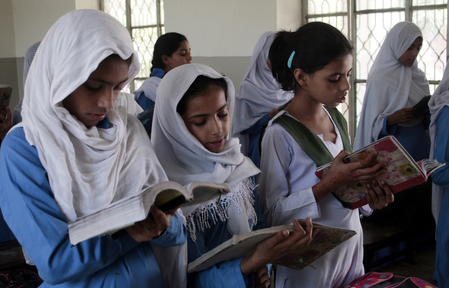
Nearly 28% of children in Pakistan, aged between 5-16 years, are not attending school, with girls disproportionately affected at 34% compared to boys at 22%, as reported by local media. These disparities are more pronounced in rural areas, particularly for girls, indicating significant barriers based on gender and geography hindering educational access. According to a survey by Gallup Pakistan, two-thirds of Pakistanis aged 10 and above have had some schooling experience, showcasing the stark inequality in educational opportunities in the country.
Pakistan’s national literacy rate currently stands at 63%, with male literacy at 73% and female literacy at 52%. The urban areas exhibit a higher literacy rate of 77% in contrast to rural areas at 56%. While 68% of children are enrolled in primary school, this percentage decreases significantly in higher education levels, with only 40% in middle school and around 30% in matriculation. The decline in student enrollment at advanced education levels underscores the obstacles faced, particularly in rural and disadvantaged areas, including safety concerns, distance to schools, and increasing opportunity costs as children grow older, particularly affecting rural girls.
Challenges such as financial constraints, domestic duties, and limited post-primary educational options contribute to children discontinuing their education. These obstacles are more pronounced for girls due to societal expectations and early marriages. The province of Punjab leads in literacy rates with 66%, followed by Sindh at 61%, Khyber Pakhtunkhwa at 55%, and Balochistan at 43%, as per The Express Tribune report.
