


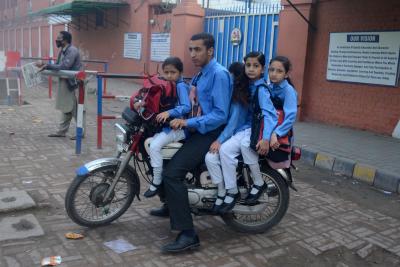
About 28% of school-age children in Pakistan, roughly 20 million, are not attending school, highlighting systemic issues beyond political promises, as per a report. Despite a decrease from 25.3 million in 2019, progress in the last six years has been slow and uneven, revealing deep-rooted problems that slogans cannot solve.
The survey also reveals ongoing disparities, with rural girls in Sindh and Balochistan facing significant exclusion. In Pakistan, one in four boys and nearly one in three girls are out of school, reflecting societal norms, poverty, and inadequate educational support.
Gender gaps persist due to economic pressures on boys and restrictions on girls, leading to a significant portion of children never enrolling in school. While Punjab has the lowest out-of-school rate at 21%, there has been no improvement since 2019, indicating policy ineffectiveness and a lack of innovation in reaching marginalized children.
The Household Integrated Economic Survey highlights the impact of high inflation and weak economic growth on household food security, with a quarter of households facing moderate to severe food insecurity. Balochistan and Sindh are most affected, emphasizing the challenge of education when basic needs are unmet.
