


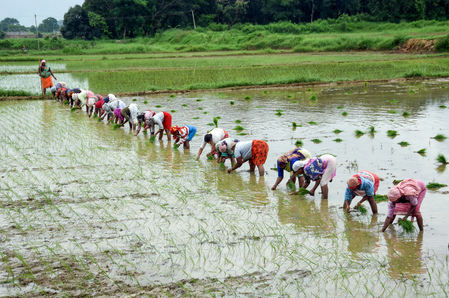
Agriculture Minister Shivraj Singh Chouhan mentioned that the government is closely watching the potential effects of El Nino. He highlighted the acceleration in kharif sowing due to expected increased rainfall this month. The Centre, under Prime Minister Narendra Modi’s leadership, is actively addressing the situation with a well-prepared strategy.
The minister noted that despite challenges, the system is fully activated in advance to proactively reduce any negative impacts. Following a 33% rainfall deficit in June, the monsoon situation has improved in July, with the deficit decreasing to 24%. Several regions in the country have experienced good rainfall recently, leading to a decrease in the number of rainfall-deficient districts.
Chouhan mentioned that kharif sowing has been completed on over 350.85 lakh hectares, which is lower compared to last year. The delayed monsoon onset has particularly affected soybean and cotton sowing. Farmers are advised to plant short-duration and low water-intensive crops like maize, bajra, and moong to mitigate the impact of delayed rainfall.
Collaborating with the Indian Council of Agricultural Research, contingency plans have been developed for districts at risk and shared with state governments in advance. Over 1.24 lakh programs were organized nationwide in June as part of the ‘Khet Bachao Abhiyan’, benefiting over 80 lakh farmers. The government has also maintained a national seed reserve of around 1.75 lakh quintals to ensure seed availability under all circumstances.
Chouhan highlighted the intensified Kisan Credit Card campaign, with over 94,000 applications approved out of 1.14 lakh received by June 30.
