


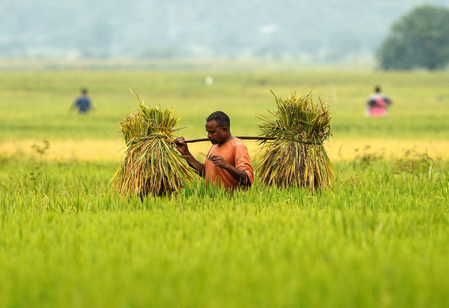
The agriculture and allied sector’s gross value added surged from Rs 20.9 lakh crore in 2014-15 to Rs 48.7 lakh crore in 2023-2024, representing about 18% of the total GVA. The agricultural sector saw a compound annual growth rate of 8.83% at current prices during this period, with crop GVA alone rising from Rs 12,92,874 crore to Rs 26,52,891 crore.
India’s agricultural sector has experienced significant growth in farmers’ empowerment over the past 12 years. The focus has shifted towards enhancing productivity, income security, market access, infrastructure, and institutional resilience, moving beyond welfare support.
Various factors such as increased agricultural output, expanded irrigation facilities, improved credit access, enhanced insurance coverage, and growth in allied sectors have contributed to this transformation. Additionally, initiatives like expanded MSP operations, digital platforms, cooperatives, and climate-resilient projects have fostered a more diversified, technology-driven, and farmer-centric agricultural system.
The Pradhan Mantri Krishi Sinchayee Yojana (PMKSY) has played a crucial role in expanding irrigation coverage and promoting water-use efficiency. Initiatives like the Soil Health Card Scheme and the Rashtriya Gokul Mission have supported scientific nutrient management and indigenous breeds and dairy productivity, respectively.
Total food grain production in India has increased significantly, reaching 357.73 million tonnes in 2024-25, with record rice output of 150.18 million tonnes and wheat production at 117.94 million tonnes. The country has also reduced its edible oil import dependence from 63.2% in 2015-16 to 56.25% in 2023-24, showing gradual progress.
Horticulture production has witnessed growth, rising from 280.70 million tonnes in 2013-14 to 369.05 million tonnes in 2024-25. This increase reflects a shift towards high-value crops, supported by improved practices and market demand.
