


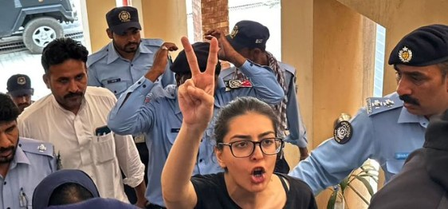
Global rights watchdog Amnesty International’s annual report has pointed out a trend of limitations on civil liberties in Pakistan, as reported by local media. The report emphasizes constraints on freedom of expression, peaceful assembly, and political engagement in the country. Amnesty International has raised concerns about changes to online speech and anti-terrorism laws in Pakistan, leading to the arrest of journalists, activists, and opposition members.
The report specifically mentions the 27th Amendment in Pakistan, which it claims has weakened the independence of the higher judiciary and granted extensive immunity to the heads of the armed forces and the president. Pakistani authorities are criticized for using detention, cybercrime, and anti-terror laws to suppress freedom of expression, including censoring online content and updating web monitoring systems with technology from China.
Enforced disappearances remain a significant issue in Pakistan, with authorities cracking down on protests by activists in Balochistan and Sindh. The report highlights incidents where law enforcement killed three protesters during a demonstration by the Baloch Yakjehti Committee (BYC) demanding the release of disappeared activists.
According to the report, over 100 leaders and activists of the Pakistan Tehreek-e-Insaf (PTI) have been convicted by anti-terrorism courts in connection with protests from May 9, 2023. Prominent figures among the convicted individuals include opposition leaders Omer Ayub and Shibli Faraz, Member of National Assembly (MNA) Zartaj Gul, and activist Khadija Shah. The report also mentions the imprisonment of PTI founder Imran Khan on what it describes as “politically motivated charges,” alleging his solitary confinement and restricted access to legal counsel.
The Amnesty report also addresses the issue of violence against women in Pakistan, citing data from the organization Sahil showing a 25% rise in reported cases over an 11-month period. Furthermore, the report highlights the targeting of journalists and human rights defenders under the Pakistan Electronic Crimes Act (Peca). Notably, journalists Asad Toor and Sohrab Barkat were prevented from leaving Pakistan, with Barkat later being charged under Peca.
The report underscores the criminal charges faced by human rights defenders such as Imaan Zainab Mazari and Hadi Ali Chatta for their social media posts in Pakistan. It also mentions the targeting of activists from marginalized communities in the country.
