


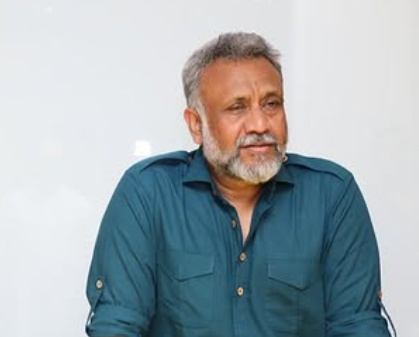
Mumbai, Aug 10 (IANS) Filmmaker Anubhav Sinha, who is known for ‘Mulk’, Thappad’, ‘Bheed’ and others is contemplating on the ecosystem and the economics of the Indian film industry. The filmmaker recently took to his Instagram, and shared a video of himself in which he is talking to the camera.
He shared how the film industry has always evolved with time and has taken new media in its stride in each era. However, the medium of OTT is something that the industry is finding difficult to navigate.
He said, “There’s a big debate going on nowadays, Theatre vs OTT, I don’t understand this debate. When the movies started, they used to come in theatres. Everyone used to watch it only in theatres. Then Doordarshan came. They said, ‘We’ll also show the films’. We said, ‘Welcome’. Then satellite TV came. they said, ‘We’ll also show the films. We said, ‘Welcome’. Then multiplexes came. They also said the same thing, we welcomed them as well. And, it’s no different with OTT. So where did this problem come from all of a sudden? What is this debate?”.
He said that the makers don’t have a problem with showing a film on OTT because when everyone was buying OTT, no one was upset.
He further mentioned, “Now suddenly OTT said, ‘We don’t want so many films, and we won’t give so much money’. Until now, our entire economics was dependent on OTT. So now we have a problem. Whether it’s cinema hall, Doordarshan, satellite TV, OTT, multiplexes, these are all business endeavours. They will make their own system. And filmmaking is a business endeavour. We are dependent on them, we are dependent on them. So why should we talk about democracy in this? Democracy has already become meaningless in the world”.
He said that the debate should be, that the next day after a film’s release, why does it come on illegal platforms like Telegram?
He went on, “No one talks about it. Neither does the industry talk about it. We have never protested for it. The next day in the morning, on every mobile phone, on Telegram, every film and every OTT series releases. So are they such big people that we can’t stop them. There is no debate about this. And I think a bigger debate than this is, that the biggest population of the country is not able to afford multiplexes. Multiplex said that we will make 5 star cinemas. That was their business model. Whether it is working for them or not, that is their problem. But when they made 5 star cinema halls, then all the single screens crumbled. It was a disaster”.
The filmmaker said that once during his visit to Varanasi, he was heartbroken to find only one single screen of Anand Nandiram.
He shared, “It is finished. So now, the middle class people don’t have that much money. They are scared to go to multiplexes. Where can they go in 5 star cinemas? They don’t have the courage. So when multiplexes started, the government gave them support. They gave a tax rebate. There was a tax vacation for so many years. What else was there? I think this is a big business opportunity. Where did those single screens go?”.
He continued, “I think this is the time when those cinema halls need to be revived. Because the middle class people, or even the middle class people, and the middle class people, have two options. Either you go to 5 star cinemas and watch a movie, or you watch it on your phone. There is no third option. If you go to YouTube, where Aamir has done a new experiment, which is a very good thing, and they are playing so much on the front foot that maybe they will have to do the same in the future. And they play on the front foot. Any business is done on the front foot. Today, they like YouTube because there is democracy there. But that might change”.
He said, “If there is a 4-star movie, then YouTube will say, ‘80% of the revenue share will be ours and 20% will be yours’. Or if they don’t show all the movies, then we will have a problem with YouTube that every business model is going to work in its own direction, today or tomorrow. So, we will have to make our business model as filmmakers so robust that it remains insulated from all these kinds of changes. And that will only happen when we depend on the theater. We keep saying that cinema is going on in the South. Because there, there are single-screen theaters that they can afford. They take chances that maybe this movie will be good. So, they go to take chances. Now, people are not able to afford to take chances in Hindi cinema”.
“So, I think the two most important debates are how the film comes on Telegram on Saturday and Sunday. And, how can we afford to buy the tickets for our poor people who are middle class. The rest are all business plans of people. Nowadays, capitalism also wears the kurta of society. So, we should not talk about democracy too much. We should talk about how we will get money if we watch movies. So, there is something that we need to do about these two things. I think this is the real debate”, he added.
–IANS
aa/
