


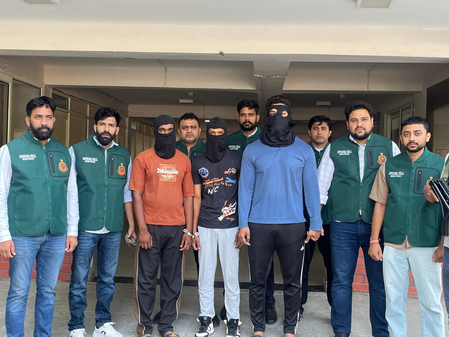
A series of recent arrests has exposed a network allegedly connected to Pakistan’s Inter-Services Intelligence (ISI)-backed operative Shahzad Bhatti. Security agencies have dismantled modules in several Indian states, including Madhya Pradesh, Maharashtra, Punjab, Haryana, Delhi, and Rajasthan. Investigations have revealed that these modules had different objectives, ranging from intelligence gathering to preparing for violent acts like petrol bomb attacks and targeted shootings.
A common factor in these cases is the emergence of the Tehreek-e-Taliban Hindustan (TTH), believed to be part of a broader ISI strategy. Officials suggest that the TTH is being developed to establish a perceived link with the Tehreek-e-Taliban Pakistan (TTP) and to create a homegrown terror outfit within India. Intelligence Bureau officials state that Shahzad Bhatti, operating from Dubai and Pakistan, plays a crucial role in recruiting for the TTH, using a mix of ideology and financial incentives.
The TTH’s recruitment strategy includes targeting both Muslim and Hindu youth to appear as a locally grown organization. By associating the TTH with the TTP, Pakistan may aim to shift blame for TTP attacks onto India. Security officials express serious concerns over the TTH’s intended operations, which go beyond traditional terror activities to include narcotics smuggling, arms trafficking, online radicalization, and propaganda.
Despite disruptions to TTH-linked modules, security agencies warn that the project is ongoing. The ISI’s commitment to the TTH project remains strong, with efforts to ensure its success despite setbacks.
