
Close Menu
  • Indian Festivals 2026
  • Movie & OTT Releases This Week
  • News
  • Entertainment
  • NRI Life
  • Research
  • Advertise with us
Facebook X (Twitter) Instagram YouTube
  • Download Indian Community App
  • Advertise Here
Facebook X (Twitter) Instagram
Indian CommunityIndian Community
Trending
  • Jetlee (2026) Review: Satya Steals the Sky in This Turbulent But Fun Telugu Action-Comedy
  • Glory (2026) Review: A Riveting Sports Drama That Packs a Powerful Punch
  • Undekhi Season 4 Review: Darker, Deeper, and More Gripping Than Ever
  • Sapne Vs Everyone Season 2 Review: A Raw, Riveting Tale of Dreams, Ambition & Survival
  • KD: The Devil 2026 Review: Dhruva Sarja’s Underworld Epic Is a Bold, Ambitious Saga
  • Patriot (2026) Movie Review: Mammootty and Mohanlal’s Legendary Reunion Delivers a Gripping Surveillance Thriller
  • Kara Movie Review: Dhanush Delivers a Gripping Slow-Burn Thriller You Cannot Miss
  • Raja Shivaji (2026) Movie Review: Riteish Deshmukh’s Grand Epic Is a Majestic Tribute to the Warrior King
  • Indian Festivals 2026
  • News
    • National
    • International
    • Entertainment
    • Achievements
    • Scam Alerts
    • Business
    • Health & Medicine
    • Science & Technology
    • Sports
  • Entertainment
  • Latest Movie Releases
    • Latest OTT Releases
  • NRI Life
  • India & Culture
  • Health & Wellness
  • Research
Indian CommunityIndian Community
Home » News » National
National

Asian Development Bank: Global Value Chains Reshaped by Geopolitical Tensions and Technological Changes

Indian Community Editorial TeamBy Indian Community Editorial TeamMay 6, 20262 Mins ReadNo Comments Add us to Google Preferred Sources
Asian Development Bank: Global Value Chains Reshaped by Geopolitical Tensions and Technological Changes
Share
Facebook Twitter LinkedIn Pinterest Email

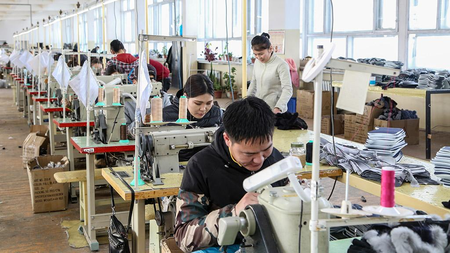
Geopolitical tensions, supply chain disruptions, and rapid technological advancements are transforming how economies engage in global value chains, as highlighted by the Asian Development Bank (ADB). The ADB’s ‘Asian Development Policy Report 2026’ underscores that Asia and the Pacific have leveraged greater specialization in global production stages to drive economic growth, job creation, and poverty reduction over the past 25 years. The report reveals that the region contributes a significant one-third share to global value chain trade, with its developing economies doubling their participation from 9% to 18% between 2000 and 2023.

ADB’s Chief Economist Albert Park emphasized that increased geoeconomic fragmentation poses challenges for firms seeking to benefit from global value chains, potentially hindering industrialization and growth in economies confined to low-value roles. To address this disparity, Park stressed the importance of supporting less-developed economies in capitalizing on emerging technologies and enhancing infrastructure, logistics, and the business environment to boost productivity and competitiveness.

Some economies in East and Southeast Asia have deeply integrated into regional and global production networks, securing pivotal positions that enable them to capture substantial value addition. Conversely, smaller, lower-income, or geographically isolated economies have experienced limited participation and exclusion from these networks. While specialization in specific production segments has facilitated swift integration into global markets, the advantages of global value chains are disproportionately enjoyed by large productive firms, with small and medium-sized enterprises encountering obstacles like high compliance costs and limited capacities, according to the report.

The report outlines three key policy priorities to foster global value chain integration. Firstly, resilience is increasingly vital for competitiveness, necessitating enhancements in connective infrastructure, firms’ adaptability to changing conditions, and policy frameworks that promote market diversification, input flexibility, and partnership expansion. Secondly, environmental sustainability is emerging as a critical factor influencing participation in global value chains, with evolving environmental standards becoming a universal requirement. Strengthening policies related to standards, certification, and traceability can facilitate the adoption of cleaner technologies and production processes by firms. Lastly, inclusion remains a fundamental goal throughout integration stages, requiring concerted efforts to reduce trade costs through infrastructure investments, open trade policies, and trade facilitation, enhance worker skills and firm capabilities, and facilitate small and medium-sized enterprises’ access to finance, digital platforms, and export opportunities.

Albert Park Asia Asian Development Bank Economy Environmental Sustainability Geopolitical Tensions global value chains inclusion Infrastructure Pacific Small and medium-sized enterprises Supply Chain Technological Changes Trade
Add us to Google Preferred Sources
Indian Community Editorial Team

The Indian Community Editorial Team curates, verifies, and publishes stories that matter to Indians worldwide. From culture and community to business and innovation, our mission is to spotlight voices, ideas, and events that bring our global community closer together. Have news or a story to share? Submit it to us at [email protected].

Add A Comment

India and EU Launch Joint Program for Recycling Electric Vehicle Batteries

May 6, 2026

Family of Three Dies in Tragic Bhubaneswar Apartment Fire

May 6, 2026

Kerala Congress Party Gears Up for Leadership Decision Amidst Three-Way Contest

May 6, 2026

Assam Minister Criticizes Congress Over Election Performance

May 6, 2026
  • Facebook
  • Twitter
  • Pinterest
  • Instagram
About Us
  • About Us
  • Contact Us
  • Terms of Service
Corporate
  • Download Indian Community App
  • Advertise Here
Facebook X (Twitter) Instagram
  • About Us
  • Contact Us
  • Terms of Service
© 2026 Designed by CreativeMerchants.

Type above and press Enter to search. Press Esc to cancel.