


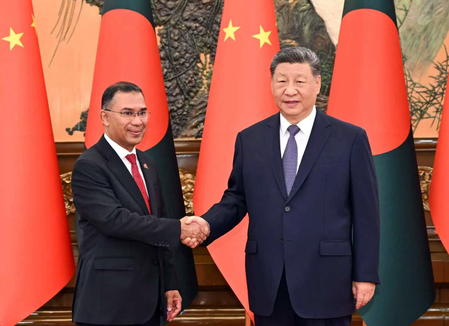
Bangladesh has been advised to carefully manage its ties with China to avoid long-term dependency risks, as per a report. The report highlights a shift in Bangladesh’s foreign policy towards enhancing defence, infrastructure, and economic cooperation with China. Questions have been raised regarding the significant expenditure on J-10 CE fighter jets and the impact on critical sectors like healthcare and education.
The report emphasizes that Bangladesh’s security should not rely solely on weapons but also on a strong economy, technology advancement, skilled workforce, and social institutions. It suggests a thorough evaluation of the necessity and implications of deepening defence ties with China. Discussions are ongoing for Bangladesh to potentially purchase 20 to 24 J-10 CE multirole fighter jets from China.
Procuring fighter jets involves more than just acquiring the aircraft; it includes training, pilot development, maintenance, and technical support. The report warns against overreliance on a single country for military technology, which could lead to strategic challenges in terms of future supplies and upgrades. China’s military technology has faced scrutiny in the past, raising concerns about potential risks.
The broader impact of Bangladesh’s military dependence on China is being questioned in terms of economic priorities. The report suggests considering investments in technological education, healthcare, and skills development for long-term national strength. It prompts a comparison of the benefits of military spending versus investments in other critical sectors for Bangladesh’s future growth.
