


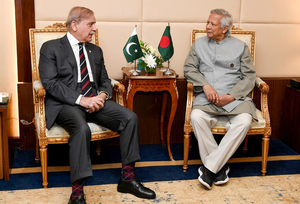
Bangladesh faces the risk of becoming part of a Sino-Pakistan security network that advances Beijing’s interests over Dhaka’s, a report revealed. Discussions have intensified regarding Bangladesh’s interest in acquiring advanced Chinese military equipment, including J-10C fighter jets, under Muhammad Yunus’ leadership. These talks involve direct negotiations with China and collaboration through Sino-Pakistani ventures, complicating Bangladesh’s strategic stance.
US Ambassador Brent Christensen’s caution about the dangers of Chinese military involvement in Bangladesh has raised concerns about the country’s shifting alliances. Bangladesh, once known for balancing global interests, appears to be moving closer to Beijing with Pakistan playing a facilitating role. Muhammad Yunus’s leadership suggests a willingness to realign Bangladesh’s geopolitical position, potentially compromising sovereignty and regional stability.
The Bangladesh Armed Forces Division, led by Lieutenant General S M Kamrul Hasan, has engaged in crucial defense dialogues with Chinese counterparts. Delegations have visited China to explore modernization options for the Bangladesh Air Force, focusing on replacing aging aircraft fleets. Additionally, discussions with Pakistan regarding the JF-17 Thunder fighter jet, jointly developed by China and Pakistan, have been intensified as a cost-effective solution.
The report highlights the risk of Bangladesh being ensnared in a Beijing-Islamabad military network, limiting diversification opportunities. Apart from defense collaborations, Yunus’s administration has facilitated Chinese infrastructure projects in sensitive areas of Bangladesh. This alignment could signify a significant power shift in the Indo-Pacific region, characterized by gradual dependence rather than overt confrontation.
