


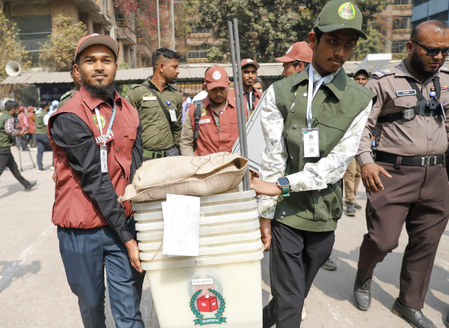
The recent Bangladesh election outcome has been praised by the media for its stance against fundamentalism and gender inequality. An alliance led by a more tolerant party secured the trust of a significant majority of the electorate. The Business Standard hailed it as a “landslide victory” for the BNP, while the Blitz termed it a “silent revolt against extremism.”
In a preliminary assessment, the Dhaka Tribune highlighted the election of seven women candidates to parliament. However, with only seven women out of 300 members, Bangladesh may still have work to do in achieving gender equality. The Business Standard pointed out key aspects of the BNP’s victory, emphasizing the voters’ rejection of theological extremism in favor of a pluralistic governance system.
The election results also underscored the rise of women’s influence, with more than half of the voters being women. The electorate rejected outdated notions about women’s leadership abilities and societal roles. Notably, this election marked the absence of the two prominent female political figures who had long dominated Bangladesh’s political landscape.
The Blitz reflected on the election as a choice for equilibrium and democracy over extremism and doctrinaire politics. It emphasized the importance of upholding sovereignty and democratic values. The media reported a voter turnout of 59.44% in the 13th parliamentary election and referendum, setting the stage for the BNP and its leader, Tarique Rahman, to fulfill the aspirations of the populace.
