


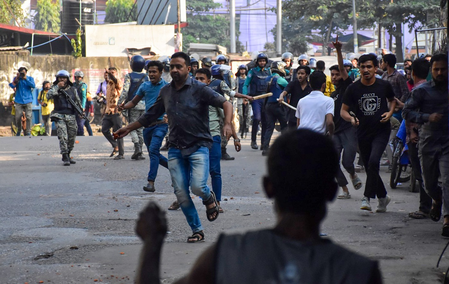
The situation in Bangladesh remains volatile as the country prepares for elections in February. Anti-India forces in Bangladesh are actively engaging in disinformation campaigns to provoke India, especially as the election nears. Intelligence Bureau officials have observed a rising trend in these activities, with attempts to incite Indian agencies, including the Army, into unwarranted actions within Bangladesh.
Multiple campaigns orchestrated by Jamaat-e-Islami and ISI aim to turn the Bangladeshi population against India. These efforts have had limited success, with only about 5 percent of the intended impact achieved so far. Initially, the campaigns alleged that India was behind the violence in Bangladesh, portraying India as the aggressor and stoking anti-India sentiments among the populace.
The disinformation efforts escalated to targeting minorities and attempting to influence the Bangladesh Army against India. While some elements within the army were swayed to adopt an anti-India stance, the top leadership maintained a mature approach and continued communication with the Indian Army. Despite persistent claims that the Indian Army would attack Bangladesh, Indian agencies and the army have refrained from falling into this trap.
Maintaining open communication channels has been crucial in navigating the tense environment. The Indian Army, under the leadership of Army Chief General Upendra Dwivedi, has prioritized transparency and dialogue. Regular communication between the Indian and Bangladesh armies, along with on-ground assessments, has helped in preventing misunderstandings and miscommunication.
Despite India’s mature handling of the situation, the disinformation campaign by ISI and Jamaat against India persists. Pakistan’s attempts to influence Bangladesh through diplomatic ties and defense cooperation have faced resistance, as the people of Bangladesh lean towards stronger ties with India over Islamabad. This preference has fueled the ongoing disinformation efforts to provoke India into actions detrimental to bilateral relations.
