


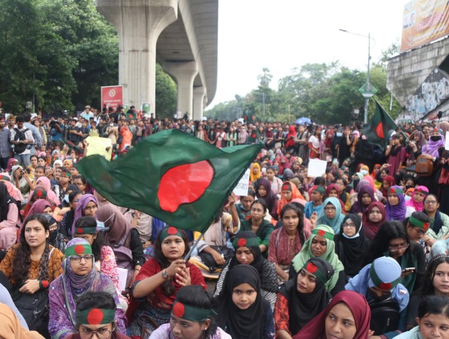
As Bangladesh gears up for a crucial national election, women candidates are encountering a surge in cyber harassment, online abuse, and misinformation campaigns. Despite women constituting half of the population, they represent only about four percent of the candidates in the upcoming polls, underscoring deep-rooted gender disparities in politics. Reports reveal that female candidates are being targeted with organized cyberbullying, character defamation, sexual harassment, and threats, both online and offline.
Several women running for office have reported instances of coordinated cyberbullying, character attacks, and even physical threats against their campaign workers. Dilshana Parul, a candidate from the National Citizen Party (NCP) in Dhaka-19, disclosed facing relentless online trolling, particularly regarding her choice to wear a headscarf. She highlighted that the attacks are not only from rival party supporters but also from those claiming to be progressive.
Nabila Tasnid, another NCP candidate from Dhaka-20, expressed that her campaign environment has been marred by unfair practices, including torn banners and festoons. She accused groups backed by coalitions of spreading misinformation and questioning women’s leadership abilities. Taslima Akhter, contesting from Dhaka-12 for Gonoshonghoti Andolon, emphasized that online harassment is rampant due to the ease of anonymous attacks, especially against women.
The Election Commission data reflects a stark gender imbalance in candidate representation, with only around four percent of candidates being women. Furthermore, out of the 51 political parties contesting the elections, 30 have not fielded a single female candidate. The prevalent lawlessness and rising political violence serve as deterrents for women considering entering electoral politics.
The upcoming 13th parliamentary elections, slated for February 12, are already notable for the absence of the Awami League and the limited participation of women candidates. The exclusion of women from top leadership positions in certain parties, such as Bangladesh Jamaat-e-Islami, further perpetuates gender disparities in politics. The convergence of cyber abuse, political violence, institutional apathy, and ideological barriers poses significant challenges to Bangladesh’s aspirations for an inclusive and representative democracy.
