


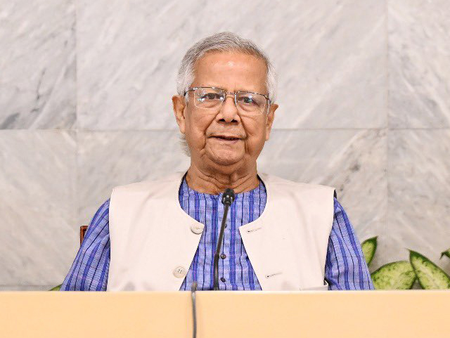
The interim government in Bangladesh, led by Muhammad Yunus, has reportedly yielded to most US demands in a recent trade deal. Despite facing various challenges, Yunus and his Advisory Council have been criticized for their concessions. The US reduced the reciprocal tax on Bangladesh by 1%, resulting in a total tax of 34%. This reduction was obtained through signing a Non-Disclosure Agreement, limiting the country’s decision-making power on economic matters.
The trade agreement entails significant commitments, including the purchase of 25 Boeing aircraft, buying wheat at above-market prices, and acquiring LNG at rates higher than market prices. Amendments to labor laws have also been made to facilitate trade union formation, even within export processing zones. Questions have arisen regarding the necessity of signing such a deal towards the end of the interim government’s term.
Economist Anu Muhammad raised concerns about the interim government’s authority to engage in such agreements, emphasizing the implications for future elected governments. There are apprehensions that subsequent political administrations will bear the consequences of these state-level agreements. Despite receiving duty-free benefits in the textile sector, Bangladesh has experienced closures of over 200 garment factories and the loss of 200,000 jobs.
