


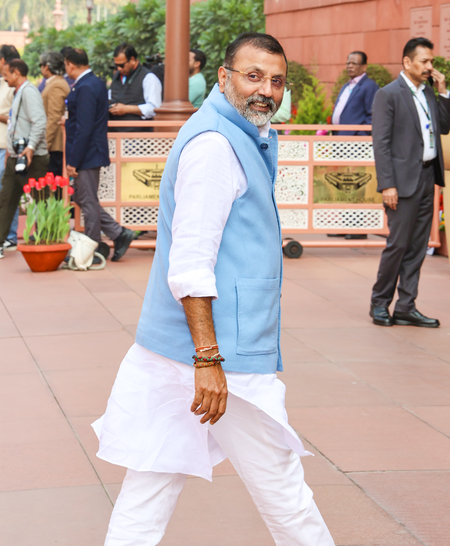
BJP MP Nishikant Dubey has drawn a comparison between his motion against Leader of Opposition Rahul Gandhi and a similar motion in December 1978 involving late Prime Minister Indira Gandhi. The 1978 motion led to Indira Gandhi’s disqualification and imprisonment for electoral and privilege-related misconduct. Dubey’s motion accuses Rahul Gandhi of breach of privilege and seeks his Lok Sabha membership cancellation and disqualification from future elections.
Dubey’s motion is based on allegations of privilege breach against Rahul Gandhi, echoing the 1978 case against Indira Gandhi. The 1978 incident stemmed from a report finding Indira Gandhi guilty of privilege breach and contempt of the House during the Emergency in 1975. The resolution adopted in 1978 resulted in Indira Gandhi’s expulsion from the Lok Sabha and her subsequent imprisonment.
Earlier, Dubey initiated a motion against Rahul Gandhi, accusing him of being associated with “anti-national” forces. This move followed a heated Lok Sabha session where Rahul Gandhi criticized the India-US trade deal, leading to protests from the treasury bench members. BJP MPs announced their intention to move a privilege motion against Rahul Gandhi, alleging his statements were baseless and malicious.
The Congress party defended Rahul Gandhi, stating that he was within his rights to criticize the government. The party argued that Rahul Gandhi’s remarks on the India-US trade deal were legitimate and did not breach parliamentary norms. Union Parliamentary Affairs Minister Kiren Rijiju confirmed the government’s decision to defer its motion against Rahul Gandhi in light of Dubey’s substantive motion.
