


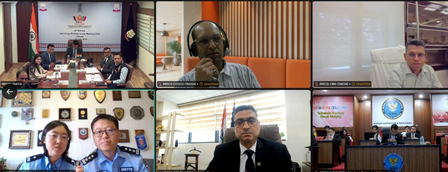
In a move to strengthen global cooperation against drug trafficking, the 8th BRICS Anti-Drug Working Group Meeting took place virtually on June 15, 2026, under India’s BRICS Presidency. Senior delegates from BRICS member nations, including China, Ethiopia, India, Indonesia, Russia, South Africa, and the UAE, gathered to discuss the challenges posed by illicit drugs.
During the meeting, representatives shared national drug situation reports and engaged in discussions on emerging drug threats, trafficking trends, operational challenges for enforcement agencies, and successful drug control practices. The participants emphasized the importance of a unified approach to combat narcotics, which pose threats to public health and regional security.
The meeting underscored the commitment of BRICS nations to enhance international cooperation, improve information exchange, build institutional capacities, and conduct coordinated operations to combat illicit drug trafficking and reduce drug abuse. This gathering was seen as a productive platform that promoted understanding and alignment on critical counter-narcotics strategies among partner nations.
The Working Group meeting served as a lead-up to the high-level meeting of BRICS Heads of Anti-Drug Agencies scheduled for July 6 and 7, 2026, in Guwahati, India. This upcoming summit is expected to build on the discussions from the working group meeting and establish concrete action points for deeper collaboration. India’s leadership in the BRICS Anti-Drug Working Group demonstrates its proactive role in the global fight against narcotics.
The NCB, which facilitated India’s participation, highlighted the importance of multilateral platforms in combating transnational drug syndicates that operate using advanced networks and technology. As drug trafficking routes evolve and new substances emerge, BRICS nations are increasingly focusing on intelligence sharing and joint capacity-building initiatives. The successful conclusion of the 8th Working Group Meeting is anticipated to pave the way for more robust cooperation in the future.
