


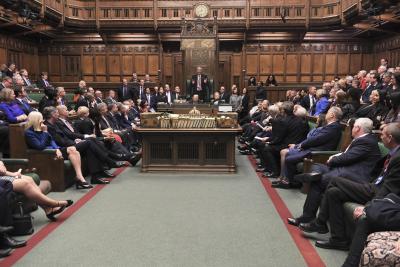
The British government announced its intention on Monday to classify Iran’s Islamic Revolutionary Guard Corps (IRGC) and two other entities as national security risks. These organizations include the Islamic Movement of Companions of the Right (IMCR) and the Volunteer Corps, overseen by the GRU Volunteer Corps of the Russian Armed Forces. If approved by parliament, these designations would mark the first under the National Security (State Threats) Act 2026. Security Minister Angela Eagle stated that supporting or benefiting from these groups in activities related to the UK would become a criminal offense, with some offenses carrying a maximum penalty of life imprisonment.
The IRGC has already faced sanctions in the UK, but this new designation process is distinct from the terrorism proscription system under the Terrorism Act 2000. The organizations in question have not yet responded to the government’s move. Earlier in May, the British Foreign, Commonwealth, and Development Office summoned Iran’s ambassador over diplomatic tensions arising from charges against three Iranian nationals under the National Security Act. These individuals were accused of engaging in activities that could benefit a foreign intelligence service.
In a related development, the three Iranian nationals, Mostafa Sepahvand, Farhad Javadi Manesh, and Shapoor Qalehali Khani Noori, faced charges at the Westminster Magistrates’ Court. The charges alleged that between August 14, 2024, and February 16, 2025, they assisted Iran’s intelligence service. Sepahvand also faced an additional charge related to planning violence against a person in the UK through surveillance and reconnaissance activities. In response to these events, Iran’s foreign ministry summoned the British charge d’affaires, expressing discontent over what it termed as baseless arrests of Iranians in the UK and rejecting the charges as unfounded.
