


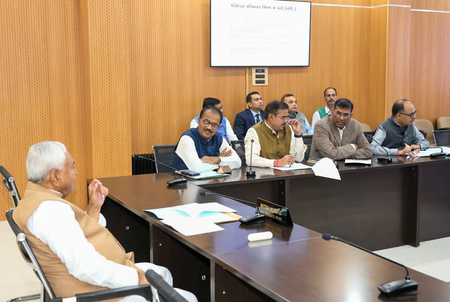
A recent cabinet meeting in Bihar, led by Chief Minister Nitish Kumar, sanctioned 41 proposals focusing on job creation and infrastructure development. The meeting, attended by all ministers, including Deputy Chief Ministers Samrat Choudhary and Vijay Kumar Sinha, marked the first of the new year. The decisions made aimed at fulfilling commitments made during the 2025 Assembly elections to the people of Bihar.
The Nitish Kumar-led administration, post the new government formation, is strategizing a special action plan to boost job opportunities and employment in the state. Emphasizing the need to fill vacancies across departments and attract private sector investments for substantial employment generation, the cabinet greenlit various development schemes and employment initiatives.
Among the approved decisions, the cabinet allocated Rs 33.29 crore for constructing a 220 KV DC transmission line to ensure uninterrupted power supply to the Integrated Manufacturing Cluster (IMC), Gaya. Additionally, the creation of 694 posts under the Agriculture Department, including Plant Protection Supervisor and Plant Protection Inspector roles, was approved to enhance agricultural services.
Furthermore, the cabinet sanctioned the temporary appointment of a Forest and Environment Advisor post for three years to expedite the resolution of forest-related issues. It also approved the reorganization of 200 posts in the office attendant cadre under the Directorate of Fisheries, along with the implementation of the “Bihar Anand Karaj Marriage Registration Rules, 2025” for registering marriages under the Anand Karaj tradition.
In a move to ease regulations, the cabinet amended the Bihar Motor Vehicle Rules, 1992, reducing the minimum educational qualification for obtaining a Conductor License. Notably, funds amounting to Rs 314.20 crore were approved for the construction of Bihar Bhawan in Mumbai under the Building Construction department. These decisions underscore the government’s commitment to employment generation, infrastructure enhancement, administrative reforms, and inclusive governance at the onset of the new year.
