


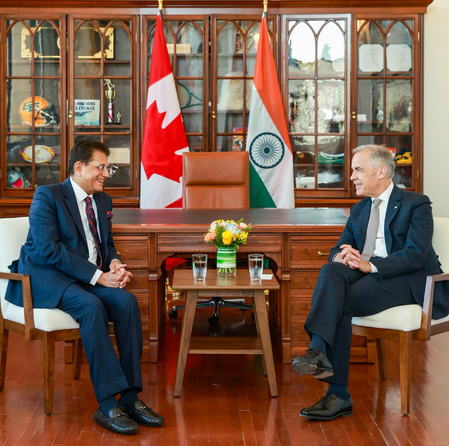
A recent analysis emphasizes the significance of the Canada-India trade agreement, particularly in critical minerals, clean energy, and knowledge-intensive services. Despite its modest overall volume, the deal plays a crucial role in Canada’s diversification strategy and North American supply chain resilience. Bilateral trade between the two countries has been steadily increasing, with merchandise trade reaching $8.4 billion in the fiscal year 2023–24.
The trade relationship between India and Canada has expanded beyond goods to include services, with a notable rise in bilateral trade to approximately $23 billion in 2024. India imports various products from Canada such as pulses, fertilizers, and industrial chemicals, while exporting gems, pharmaceuticals, and engineering goods. This shift reflects India’s position as a diversified manufacturing hub.
Services have emerged as a dynamic aspect of the bilateral relationship, with potential for significant value-added gains through agreements like the Early Progress Trade Agreement (EPTA) or Comprehensive Economic Partnership Agreement (CEPA). Canada’s services exports to India remain relatively low, but there is a growing reliance on Indian IT and professional capabilities.
The strategic importance of the India deal for Canada lies in diversification, moving away from heavy reliance on the United States and managing its relationship with China. Both countries have shown interest in enhancing trade ties, with Canada aiming to double two-way trade with India by 2030. India’s economic growth and energy demands make it a key market for Canadian resources like LNG and crude.
India’s focus on rapid electrification and renewable energy aligns with Canada’s strengths in critical minerals and aerospace technology. The two nations have outlined a two-step approach for trade agreements, starting with an Early Progress Trade Agreement and moving towards a Comprehensive Economic Partnership Agreement. This strategic alignment aims to boost economic cooperation and mutual benefits.
