


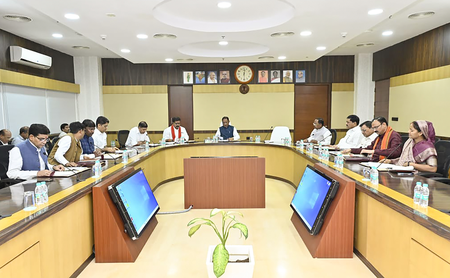
The Chhattisgarh Council of Ministers, led by Chief Minister Vishnu Deo Sai, has approved various measures benefiting agriculture, transport, energy, and mining sectors. Deputy Chief Minister Arun Sao highlighted these decisions as crucial for the state’s long-term progress and economic growth.
One significant move includes the in-principle approval for the Chhattisgarh State Power Transmission Company Limited to be listed on the stock exchange through an initial public offering (IPO). This step aims to involve citizens and investors in the company’s growth, enhance financial stability, ensure transparency, and attract more investments.
Another notable decision is the introduction of the Krishak Unnati Yojana scheme to boost agriculture. Starting from the Kharif 2026 season, this scheme will provide input assistance of Rs 15,000 per acre to farmers cultivating alternative Kharif crops like pulses, oilseeds, maize, and cotton. The benefits will be disbursed transparently through various digital platforms to promote crop diversification and sustainable farming practices.
The Cabinet also approved the procurement of chana through e-auction for the Public Distribution System in the financial year 2026–27. Additionally, the transfer of the Yoga Department to the Medical Education Department was decided to enhance integration with the AYUSH system for better education, training, and research coordination.
Furthermore, the Cabinet sanctioned the operation of 240 electric buses in several cities under the “Prime Minister’s e-Bus Sewa” scheme. This initiative is aimed at reducing urban pollution and providing modern, affordable public transport services. The stamp duty exemption for land purchases by the Naya Raipur Atal Nagar Development Authority has been extended to March 31, 2028, to expedite infrastructure development in the new capital region.
In a bid to improve transparency in the mining sector, the Cabinet approved amendments to the Chhattisgarh Minerals Rules 2009. These amendments make RFID tags and vehicle tracking systems mandatory for mineral transport vehicles, introduce modern technology-based assessment systems for mineral grades and quantities, and implement measures to streamline operations and deter illegal activities.
