


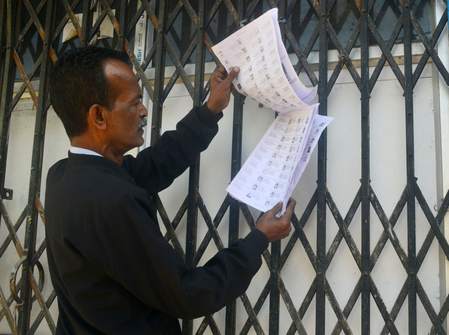
The Chief Electoral Officer (CEO) of Chhattisgarh has introduced the first daily bulletin for the Special Intensive Revision (SIR) of electoral rolls, highlighting significant political and public participation in enhancing the voter list. The revision, running from December 23, 2025, to January 22, 2026, focuses on the Draft Electoral Roll covering 1,84,95,920 electors to ensure accuracy and inclusivity for upcoming elections. Political parties have actively engaged through Booth Level Agents (BLAs) in this process.
In Section A, national and state parties collectively appointed 38,846 BLAs, with 93 claims for inclusion and none for exclusion. The Bharatiya Janata Party (BJP) led with 20,017 BLAs and all 93 inclusion claims. The Indian National Congress (INC) followed closely with 17,681 BLAs but no claims. State parties like Janta Congress Chhattisgarh (J) also participated by appointing 528 BLAs without claims. BLAs are authorized to collect Form 6 (inclusions) and Form 7 (objections) from the public, with only valid forms considered for processing.
The bulletin emphasizes the need for necessary declarations for final additions to the roll. Pre-publication data showed significant activity, with 55,017 Form 6 applications for additions in Section B and 2,740,759 Form 7 applications for deletions in Section C. Following the publication, direct submissions from electors in Section D increased, with 23,515 Form 6/6A for inclusions and 478 Form 7 for exclusions. Section E reported zero affidavits under Section 2(g) of the Representation of the People Act, 1950.
Chhattisgarh’s proactive stance on electoral integrity is evident in this initial report, with parties like the BJP and the INC actively involved in grassroots verification. The high number of BLAs is attributed to the state’s tribal and rural demographics, where booth-level outreach holds significance. Citizens are encouraged by the CEO to verify their details on the draft roll, available at polling stations or online, and submit claims promptly to prevent disenfranchisement. Subsequent bulletins will track trends as the revision progresses, potentially leading to a more accurate voter registry.
