


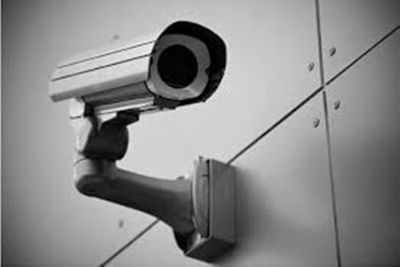
China may have the ability to access a significant portion, estimated at 80–90 percent, of surveillance cameras in Ukraine, including those on drones, which poses a direct security risk during conflicts and the potential for drone interception, as per a recent report. The report highlighted instances where Russian forces intercepted control of Ukrainian drones, emphasizing the security implications.
According to the report by Ukrainian media dev.ua, Octava Capital founder Oleksandr Kardakov mentioned that Chinese company Hikvision had installed around 7,000 cameras in the Kyiv Smart City project by 2020. These cameras are equipped to perform various functions like license plate and facial recognition, as well as ensuring security in educational institutions.
The report further pointed out that if China possesses a backdoor access, it could have extensive surveillance capabilities across the streets of the Ukrainian capital and beyond. Hikvision is identified as the most widely used video surveillance system in Ukraine, raising concerns about potential security vulnerabilities.
The report also highlighted that in the United States, equipment from Hikvision and Dahua is considered a risk to national security, as per the Federal Communications Commission’s list. It mentioned that sensitive facilities covered by Chinese intelligence laws are restricted from using Chinese-made surveillance systems in the UK.
Concerns mentioned in the report extend beyond cameras to include base stations of mobile operators. Chinese-manufactured batteries in these stations often have remote control functionalities, while a significant portion of smartphones in Ukrainian networks are also of Chinese origin. Additionally, popular energy equipment brands like Ecoflow, Bluetti, and Deye are widely used in Ukraine to provide household electricity during energy shortages.
The report noted that apart from China, the United States holds significant technological influence in Ukraine. American entities control major payment systems like Visa and Mastercard, cloud services such as AWS, Microsoft Azure, and Google, as well as advanced technologies like AI through companies like Open AI and Anthropic.
