


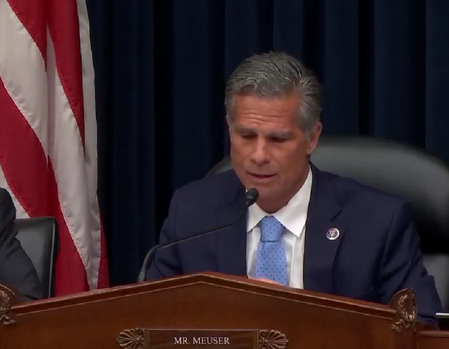
Republican lawmakers and expert witnesses highlighted in a congressional hearing the significant role played by Chinese money laundering networks in supporting Mexican drug cartels. These networks facilitate the movement of billions of dollars in illegal proceeds through the global financial system, posing challenges to US efforts in combating fentanyl trafficking. The House Financial Services Subcommittee on Oversight and Investigations delved into the issue, focusing on how Chinese money laundering networks exploit vulnerabilities in the US financial system while adapting their techniques to evade detection.
Chairman Dan Meuser emphasized the critical function of these networks in transferring profits derived from fentanyl sales within the United States. He explained a complex financial cycle where drug proceeds are converted and transferred across borders. Liana Rosen, an expert in international sanctions and financial crimes, informed lawmakers that Chinese money laundering networks utilize various channels to conceal illicit funds. These networks are known to exploit cash-intensive businesses, real estate, and money service businesses to launder money discreetly.
Representative Zach Nunn expanded on the threat posed by Chinese money laundering networks, stating that they extend beyond narcotics trafficking. Nunn pointed out that these networks also support a broader range of illicit activities, including aiding North Korean hackers, Iranian operations, terrorism, and Russian crime rings. Witnesses at the hearing stressed the need for a more comprehensive government response to tackle the issue effectively. Retired Treasury special agent John Cassara highlighted the increasing involvement of Chinese money laundering groups in handling proceeds from Mexican cartels over the past five years.
Cassara called for a comprehensive strategy to combat Chinese transnational crime and proposed the formation of regional task forces involving federal, state, and local authorities. Leland Lazarus, founder and CEO of Lazarus Consulting, advocated for enhanced coordination among government agencies, financial institutions, and international partners. He suggested strengthening transparency measures, expanding enforcement tools, and improving the capacity to identify and dismantle criminal financial networks. The prevalence of fentanyl in US-China relations has led to accusations against Chinese suppliers for providing precursor chemicals used by Mexican cartels in manufacturing the synthetic opioid.
