


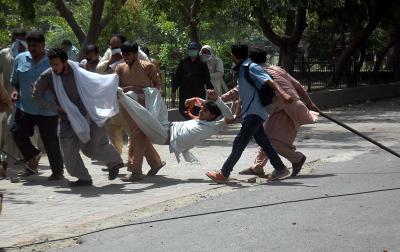
A clash between authorities and the Jammu Kashmir Joint Awami Action Committee (JAAC) in Pakistan-occupied Kashmir (PoK) has sparked worries about political representation and the use of anti-terror laws against grassroots movements. Initially a push for electoral reform, the situation has escalated into a crisis involving communication blackouts, heavy security presence, arrests, and disputes over public order and democratic rights. The conflict stemmed from JAAC’s call for a peaceful protest on June 9, leading to tensions and confrontations.
Ahead of the planned protest, JAAC was officially labeled a proscribed organization on June 6, accused of various offenses including terrorism and disturbing public order. Authorities imposed a region-wide communication blackout on June 5, suspending mobile internet, broadband services, and voice communications until June 12. This move was seen as a preventive measure before the scheduled demonstration, limiting residents’ ability to communicate and access help during the escalating tensions.
The situation intensified post-ban with increased arrests of JAAC members and associated individuals, along with crackdowns on movement-related offices and networks. Reports indicated a broadening of the crackdown beyond just the leadership, with activist Sohrab Barkat’s arrest linked to a YouTube video. Violent clashes erupted on June 7 in Rawalakot city of Poonch district, with clashes between security forces and JAAC supporters resulting in casualties, though figures varied between official and local sources.
The crisis in PoK has triggered concerns about human rights violations, as a movement advocating political reform faced stringent anti-terror measures, arrests, communication restrictions, and heavy security presence. The actions taken have hindered the populace’s ability to organize, communicate, and document events during a highly volatile period in the region.
