


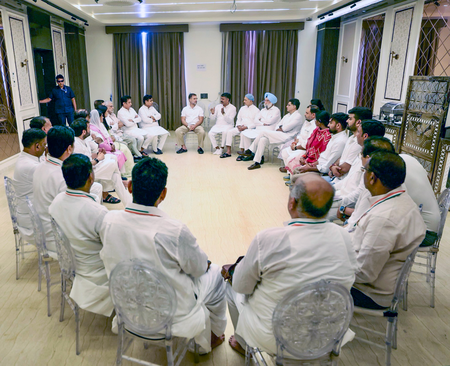
Congress’ 10-day training camp in Pushkar has sparked discussions in Rajasthan, focusing on various key developments. These include Rahul Gandhi’s symbolic ‘chair politics’ act, his praise for party leaders Tikaram Jully and Govind Singh Dotasra, the absence of Ashok Gehlot, and Sachin Pilot’s active participation. The camp signifies a deliberate effort by the Congress high command to reshape Rajasthan politics and move away from faction-driven politics.
Rahul Gandhi’s ‘chair politics’ demonstration at the camp stood out as a significant political gesture. He transformed the dais into a symbolic political classroom, emphasizing the need to avoid a blind pursuit of power. While Congress leaders viewed this as innovative political communication, the BJP criticized it as theatrics, with Rajasthan minister Avinash Gehlot dismissing it as mere drama.
The camp marked a departure from the dominance of Ashok Gehlot and Sachin Pilot in Rajasthan Congress politics. Rahul Gandhi stressed the importance of unity among leaders and workers for the party’s return to power. He highlighted the shift towards booth-level strengthening, accountability, and grassroots organizational rebuilding, signaling the end of relying solely on charismatic leaders for electoral success.
Rahul Gandhi’s interactions with party members underscored the importance of collective leadership and organizational discipline. His praise for Dotasra and Jully, seen as more than routine appreciation, hinted at a shift towards valuing organizational leadership over factional interests. The camp aimed to bury past factional conflicts and prepare the Rajasthan Congress for a new political model under collective leadership.
