


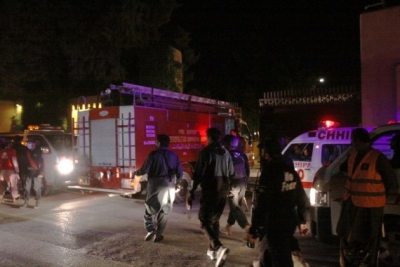
Critics caution that the ongoing militarised governance in Pakistan’s Balochistan could worsen alienation and instability in the region. Recent attacks in Balochistan are not only undermining Pakistan’s security narrative but also posing a threat to international investment commitments, particularly those involving the US and China, as reported by Kenya-based Capital News. The Balochistan region, known for its abundant minerals and strategic location along the Arabian Sea, has experienced a series of coordinated assaults by the Baloch Liberation Army (BLA), resulting in casualties among civilians, security forces, and insurgents. This violence has exposed the vulnerability of Balochistan, which has been predominantly governed through security measures rather than political dialogue.
Balochistan’s conflict traces back to 1948 when it became part of Pakistan, with Baloch leaders consistently raising concerns about political marginalisation, lack of control over resources, and limited economic opportunities. Responding to these issues, successive governments have resorted to heavy military presence and security operations in the region. The situation has gained greater geopolitical significance in recent years due to the China–Pakistan Economic Corridor (CPEC). The development of Gwadar Port, highways, and energy infrastructure in Balochistan is crucial for China’s regional trade strategy and Pakistan’s economic revival plans. Simultaneously, Pakistan aims to attract Western investments in Balochistan’s mineral reserves, including copper, gold, and gas. However, persistent insecurity has cast doubts on the sustainability of long-term investments in the area.
Pakistan’s military leadership, led by Army Chief General Asim Munir, argues that security operations are essential to combat separatism and uphold national unity. Nevertheless, there are concerns among some observers regarding the accuracy of casualty figures and the extent of unrest, raising questions about transparency in crisis management. Human rights organizations have expressed worries over alleged media blackouts and restrictions on peaceful demonstrations, particularly by families seeking information about missing individuals. The repercussions of the conflict extend beyond Pakistan’s borders due to Balochistan’s strategic significance, bordering Iran and Afghanistan and serving as a gateway to vital maritime routes. Any instability in Balochistan could impact regional trade networks and broader geopolitical dynamics.
