


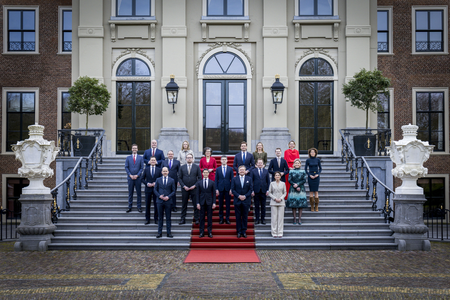
A Dutch minority government was officially sworn in at Huis ten Bosch Palace in The Hague, more than 110 days after the general election last year. The new cabinet consists of 18 ministers and 10 state secretaries from a coalition of Democrats 66 (D66), the People’s Party for Freedom and Democracy (VVD), and the Christian Democratic Appeal (CDA). Prime Minister Rob Jetten met with King Willem-Alexander before the swearing-in, signaling the transition to the new administration.
The government’s initial focus will be on drafting its policy program under the coalition agreement. Key priorities include enhancing public administration efficiency, accelerating housing construction and energy transition, implementing proactive climate policies, boosting high-tech industries for economic growth, tightening immigration policies, reforming social security and healthcare systems, and strengthening national security and international cooperation. The first cabinet meeting is set for Monday afternoon to kick off these tasks.
In the parliamentary election last October, 27 parties participated, with 15 winning seats in the House of Representatives. The coalition of D66, VVD, and CDA, with a total of 66 seats in the 150-member House of Representatives, announced their plan to form a minority cabinet on January 9. This move, given the lack of majority support at the outset, is an unusual occurrence in Dutch politics. The success of this cabinet will depend on its ability to collaborate effectively with various governmental bodies, civil society organizations, and the Parliament.
