


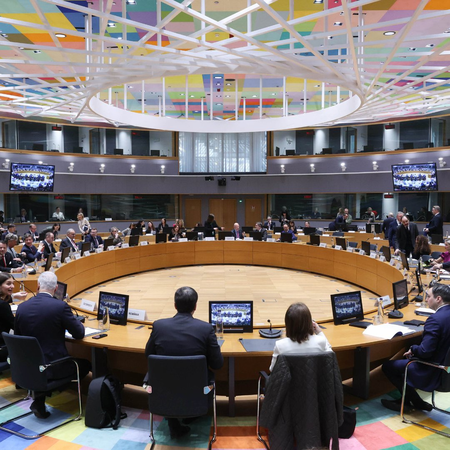
The Council of the European Union has decided to suspend customs duties on key nitrogen-based fertilisers like urea and ammonia for a year. This move aims to help EU farmers cope with the disruptions caused by the Iran war, which have led to a significant increase in global fertiliser prices. The closure of the Strait of Hormuz has affected about one-third of the world’s fertiliser trade, prompting concerns of a potential agrifood crisis.
The tariff suspension, as per the Council’s statement, is estimated to save EU farmers and the fertiliser industry around 60 million euros (69.6 million US dollars) in import duties. However, this exemption does not apply to fertiliser products imported from Russia or Belarus. The measure will come into effect the day after its publication in the EU’s Official Journal.
To address the interests of EU producers, the Council has set a quota for the tariff exemption. This quota is determined based on the volume of most-favoured-nation imports in 2024 plus 20% of the volumes imported from Russia and Belarus in the same year. In 2024, the EU imported significant amounts of ammonia and urea, crucial for nitrogen-based fertiliser production, along with other nitrogen-based fertilisers and mixtures.
The European Commission recently introduced the Fertiliser Action Plan to assist farmers grappling with soaring fertiliser costs and scarcity. This plan aims to bolster domestic production, reduce Europe’s reliance on imports, and promote sustainable solutions. Ursula von der Leyen, President of the European Commission, emphasized the importance of investing in a robust European fertiliser industry to support farmers and drive innovation towards sustainable practices and economic resilience.
