


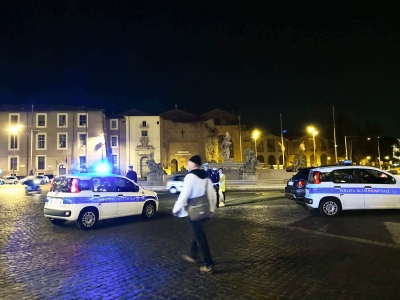
The recent execution-style killing of two Sikh men in Italy’s Bergamo province sheds light on internal rivalries, financial interests, and political rifts within sections of the Indian diaspora in Europe. The victims, 47-year-old Rajinder Singh and 48-year-old Gurmit Singh from Punjab, were shot dead outside a Sikh cultural center in Covo. The attack, characterized by close-range gunfire in front of witnesses and CCTV cameras, was reportedly carried out by an Indian national from Antegnate with at least three accomplices.
The incident occurred on the eve of Baisakhi, a significant festival in the Sikh calendar, leading to the cancellation of a planned procession that was expected to attract 2,000 worshippers to the area. Rajinder Singh, a former Sikh association president in Italy, had been involved in disputes with a rival group in Antegnate, escalating into formal complaints in recent times. The struggle for control over the religious center and leadership seems to have broader implications beyond local conflicts.
Reports suggest that the victim had clashed with Khalistani extremist groups like Sikhs for Justice during Khalsa Day celebrations, although these claims remain unverified. Such incidents reflect deeper political and identity divisions within certain segments of the Sikh diaspora. Apart from the criminal aspect, this case raises concerns about unity and safety within the Indian diaspora in Italy and Europe, with instances of intra-community violence increasingly visible, often stemming from religious leadership disputes, local power struggles, or personal animosities.
The Sikh community in Italy, traditionally seen as well-integrated and influential in sectors like agriculture and logistics, is now facing growing exposure to transnational influences. Political and identity tensions related to Punjab, including discussions about Khalistan, have spilled over into diaspora networks, contributing to internal polarization. These tensions have not only surfaced within community settings but have also become evident in public spaces, as seen in Milan where a political demonstration following the killings featured small groups displaying pro-Khalistan messages, indicating the widening impact of these issues beyond community boundaries.
