


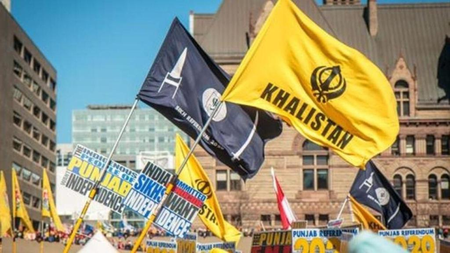
The FBI, in collaboration with US law enforcement, conducted “Operation Hard Ball,” arresting over 20 individuals linked to the Lawrence Bishnoi network. This operation aimed to dismantle key factions of the criminal syndicate operating in North America and India. Despite targeting the network’s illegal activities, no evidence was found implicating the Indian government in the killing of Hardeep Singh Nijjar, a Khalistani operative.
Tensions between India and Canada escalated after Nijjar’s death, with Canadian Prime Minister Justin Trudeau accusing Indian authorities. However, recent actions by the US have refuted these allegations, vindicating India’s stance. Canada had detained and charged four Indian nationals in 2024 for Nijjar’s killing, but these claims have been proven false.
The US has indicted Bishnoi and his associate Goldy Brar for ordering Nijjar’s assassination, raising doubts about Canada’s 2024 probe. Both the FBI and the Royal Canadian Mounted Police found no proof of Indian government involvement in the crime. The RCMP Deputy Commissioner emphasized that ongoing investigations have not linked Indian officials to the incident.
India maintained that Nijjar’s murder resulted from gang rivalry, not state-sponsored actions. Improved relations between India and Canada, especially after Trudeau’s departure and Mark Carney assuming office, have led to enhanced cooperation. Both nations are collaborating on addressing the Khalistan movement, with Modi scheduled to visit Canada for a trade agreement signing.
Efforts to combat the Khalistan movement involve close coordination between Indian and Canadian agencies. Modi has highlighted the threat posed by Khalistani elements, leading to joint intelligence sharing and crackdowns on related activities. Canada’s measures against the movement, supported by India, aim to eliminate its influence, particularly its anti-India propaganda efforts.
