


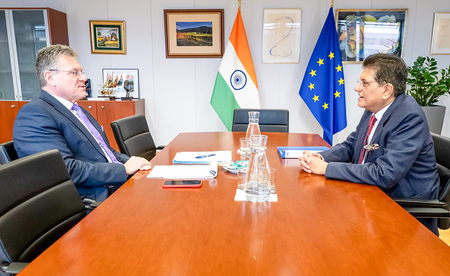
India, known as the world’s fastest growing economy, has become increasingly significant to Western nations due to global changes influenced by Donald Trump’s presidency, China’s distancing, and the ongoing Ukraine-Russia conflict. The India-EU free trade agreement signifies this shift, with Europe aiming to expand markets, secure supply chains, and establish reliable partners. The Indian government is actively implementing the pact’s commitments to safeguard economic advantages from the outset, while the EU must demonstrate its ability to fulfill promises, as noted in the European Conservative.
“The EU views its ties with India as a major geo-economic venture,” mentions Javier Villamor, a Spanish journalist. Current bilateral trade surpasses 180 billion euros annually, with the potential to save European exporters about 4 billion euros yearly in tariffs. India’s market size, demographic influence, industrial capabilities, and strategic Indo-Pacific position make it an essential partner for the EU, according to the article.
India has requested assurances from Brussels to prevent future European regulations that could impact exports of specific recyclable materials crucial to industries like steel and aluminum. This issue, though technical, tests the EU’s ability to align internal regulations with trade commitments made with key partners. The strengthening bond between India and Western Europe raises questions about the EU’s credibility as a trading bloc and its capacity to match geopolitical aspirations with operational efficiency.
