


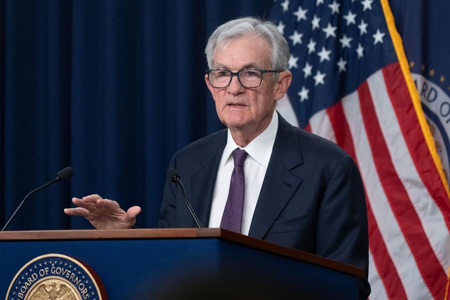
Federal Reserve Chair Jerome Powell announced that the US central bank would maintain interest rates at their current levels due to uncertainties stemming from higher oil prices and the Middle East conflict. Powell emphasized that the decision was appropriate given the solid pace of the US economy’s expansion, despite inflation exceeding targets and signs of weakness in the labor market. He highlighted the uncertain impact of Middle East developments on the US economy and affirmed the Fed’s vigilance towards risks affecting its dual mandate.
Powell disclosed that the Federal Open Market Committee opted to retain the policy rate within the 3.5 to 3.75 per cent range. While inflation had moderated since its peak in 2022, it still surpassed the central bank’s 2 per cent objective. Recent estimates indicated a 2.8 per cent increase in total PCE prices over the past 12 months, with core PCE prices rising by 3.0 per cent. Powell noted that current inflationary pressures were primarily driven by goods inflation, tariffs, and the added risk posed by escalating energy costs.
Addressing concerns about the potential economic effects of sustained high oil prices and supply chain disruptions from the conflict, Powell underscored the prevailing uncertainty. He emphasized the Fed’s flexibility in decision-making, with any future rate adjustments contingent on the expected slowdown in inflation. Powell reiterated the importance of anchoring inflation expectations at 2 per cent and acknowledged the evolving dynamics in the labor market, marked by subdued private-sector job creation and changing employment patterns.
Powell dismissed parallels with the 1970s stagflation era, emphasizing the less severe nature of the current inflation and employment challenges. Despite acknowledging the complexities, he commended the US economy’s resilience in navigating various shocks in recent years. The Fed’s cautious approach, maintaining rates following previous reductions, reflects a strategic move towards policy neutrality, with ongoing assessments on the necessity of further easing measures.
