


The governance issues in Pakistan-occupied Gilgit Baltistan (PoGB) stem from a flawed system that merely shuffles power without addressing fundamental concerns. Elite capture through opaque processes allows control over resources without accountability, leading to mismanagement. Major political parties fail to fulfill promises of autonomy and reforms, perpetuating uncertainty in the region.
The dominance of national political parties like PML-N, PPP, and PTI in PoGB overlooks genuine local empowerment, focusing instead on strategic interests. The region lacks a locally rooted political structure, with decisions made opaquely, shielding decision-makers from accountability. This has marginalized citizens, leading to weak institutions and political instability.
Local leadership in PoGB often emerges through patronage networks rather than public support, weakening institutions and hindering political consensus. A new generation in PoGB, educated and politically aware, demands genuine rights and participation, challenging the status quo. The cycle of ambiguity and misgovernance may face resistance from this rising generation.
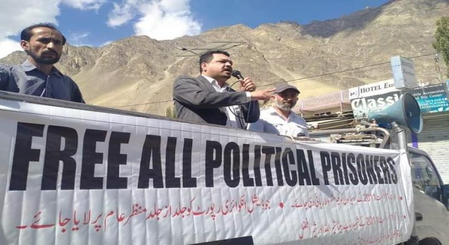
Amnesty International has called for the release of detained activists in PoGB, highlighting concerns over their rights to assembly and expression. Arbitrary detentions under anti-terrorism laws for peaceful activism have raised international alarm. The denial of appropriate medical care to detainees, including AAC chairperson Ehsan Ali, has sparked concerns over human rights violations.
