


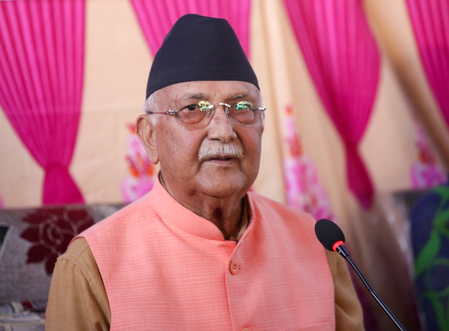
When Nepal holds parliamentary elections on March 5, all attention will be on the Jhapa-5 constituency, where former Prime Minister KP Sharma Oli is up against engineer-rapper-politician Balendra Shah, also known as ‘Balen’. Oli, who has won seven times in Jhapa, is now focused on his own constituency due to the challenge from Balen, who recently resigned as Kathmandu mayor to contest against Oli. Balen, a popular figure with a significant social media following, is seen as a potential future prime minister by his party, the Rastriya Swatantra Party.
After Balen’s resignation as Kathmandu mayor to challenge Oli, the former Prime Minister has been limited to campaigning in his own constituency, a shift from his previous nationwide campaign strategy. Balen, known for his strong social media presence and support for Gen Z protestors, has emerged as a prominent figure challenging Oli’s political stronghold in Jhapa-5. The upcoming election in Jhapa-5, with over 160,000 registered voters, is expected to be a closely watched battle between Oli and Balen, symbolizing a clash between the old and new political forces.
Jhapa-5, historically a stronghold of communist voters and considered Oli’s political fortress, is witnessing a significant electoral challenge from Balen, who represents the new political forces. Balen’s entry into the Rastriya Swatantra Party and his projection as a potential future prime minister have added symbolic significance to the electoral contest in Jhapa-5. With a swing vote visible in the constituency, the outcome of the election not only impacts the immediate results but also the political trajectories of both Oli and Balen.
