


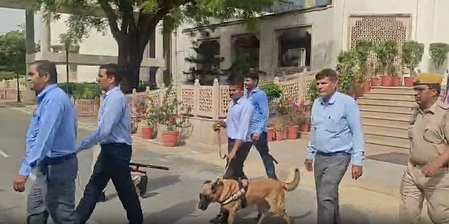
Panic struck Rajasthan’s judicial and security sectors as the Jaipur and Jodhpur benches of the Rajasthan High Court received new bomb threats via email. Security measures were immediately heightened, and access to the court premises was limited while thorough searches were conducted. Despite no explosives being discovered at the time, authorities are treating the threats with utmost seriousness.
This recent threat is part of a series, with the Rajasthan High Court having received over 12 bomb threat emails since late 2025. Although all previous threats turned out to be false alarms, each incident disrupted court proceedings, causing delays and necessitating extensive security operations.
The repeated threats have raised concerns about the identity of the senders and why they have evaded law enforcement despite ongoing investigations. The latest threat targeted both the Jaipur and Jodhpur benches, prompting the High Court administration to notify the police and intelligence agencies.
Security personnel evacuated and sanitized critical areas of the court complexes, while bomb disposal units and sniffer dogs conducted searches. Cyber investigators began tracing the digital footprint of the threatening email.
Authorities have not disclosed details of the investigation, but cybersecurity experts highlight the complexity of tracking anonymous threat emails, especially if sent through multiple networks or overseas infrastructure. Cross-border investigations require cooperation from foreign service providers and legal processes, which can be time-consuming.
Each bomb threat, even if unsubstantiated, leads to disruptions in court activities, affecting litigants and legal professionals. The recurring threats not only strain resources but also impact access to justice for many individuals. Security agencies are exploring whether the threats aim to instill fear or test law enforcement readiness.
While no definitive conclusions have been reached, the repeated threats emphasize the need to bolster cyber investigations and physical security at court complexes. Legal experts advocate for enhanced surveillance, improved access control, and advanced forensic capabilities to swiftly identify online offenders.
Despite the false alarms thus far, the persistent targeting of Rajasthan’s key judicial institution highlights the escalating challenge posed by anonymous digital threats, necessitating a proactive approach to ensure security and continuity of court operations.
