


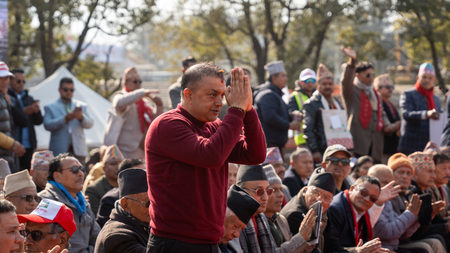
A Special General Convention of the Nepali Congress saw Gagan Thapa elected as the new party president following his expulsion by a faction led by former Prime Minister Sher Bahadur Deuba. The convention also appointed Bishwa Prakash Sharma and Pushpa Bhusal as vice-presidents, and Pradeep Poudel and Gururaj Ghimire as general secretaries. This transition signifies a shift from the old guard to a new leadership era, albeit leading to internal division within the party.
The newly elected leadership faces the immediate challenge of gaining recognition from the Election Commission or potentially the Supreme Court as the legitimate authority of the Nepali Congress. Both factions have submitted claims of legitimacy to the Election Commission, raising uncertainties about the party’s unity ahead of the upcoming March 5 election. This split marks the second time in 23 years that the party has experienced internal discord, casting doubts on its electoral performance.
In his acceptance speech, Thapa pledged to lead in a manner that instills pride in all Nepali Congress members. He emphasized the party’s commitment to being a supportive force for the public, criticizing the previous leadership for disregarding public sentiments. Despite failed negotiations between the convention organizers and the Deuba-led faction, the convention proceeded with the leadership election after disagreements over power transition before the elections.
The rift deepened as the Deuba faction took disciplinary action against key leaders, including Thapa and Sharma, prompting Thapa and Sharma to convene the convention without Deuba’s consent. Thapa’s rise to prominence dates back to his involvement in the 2006 people’s movement, advocating for a republic and challenging monarchical rule. His popularity within the party and among the public has solidified over the years, leading to his election as the party president amid internal turmoil.
