


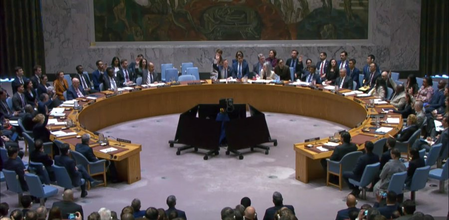
The Gulf Cooperation Council (GCC) countries, led by Bahrain’s Permanent Representative Jamal Fares Alrowaiei, have intercepted over 954 Iranian missiles, 2,500 drones, and 17 aircraft. Alrowaiei highlighted the impact of these attacks on trade, maritime routes, and the regional economy, prompting a call for a Security Council condemnation of Tehran. The attacks targeted various civilian infrastructure, including residential areas, food distribution facilities, airports, ports, and energy installations, affecting multiple countries.
The proposed resolution, supported by the GCC countries and Jordan, is set to be discussed at the Security Council. The resolution’s fate hinges on the decisions of veto-wielding countries like Russia and possibly China. Concerns have been raised that Russia may block the resolution due to its omission of mentioning the US and Israel, who were involved in the initial attack.
The United Arab Emirates’ Permanent Representative Mohamed Abushahab emphasized that despite clear declarations of neutrality, Iran carried out attacks on the UAE. He praised the UAE’s defense capabilities for averting potential devastation and loss of lives resulting from Iran’s actions. Abushahab noted that individuals from 25 countries were impacted by the Iranian strikes, reaffirming the UAE’s commitment to tolerance and coexistence in the face of extremism.
Secretary-General Antonio Guterres expressed deep concerns about the regional implications of the conflict during a conversation with Iran’s Foreign Minister Seyed Abbas Araghchi. Guterres stressed the importance of upholding international law, humanitarian principles, and protecting civilian lives and infrastructure. He had previously engaged with GCC envoys and Qatar’s Amir Tamim bin Hamad Al Thani on the matter.
