


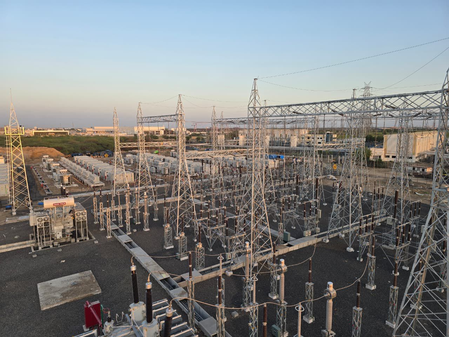
Gujarat has increased its battery energy storage capacity to 870 megawatts spread across five operational sites. This expansion is part of the state’s efforts to manage the fluctuating output of renewable energy and enhance grid stability. The state initially showcased Battery Energy Storage Systems (BESS) in Modhera, Mehsana district, known as India’s first solar-powered village integrating solar generation with battery storage.
Following the success of the Modhera model, Gujarat has progressively enhanced its storage infrastructure deployment across multiple locations. Officials confirm that battery storage systems are now active at five sites in the state, with recent installations including a facility in Charal, Sanand taluka of Ahmedabad district. Operational locations also include Modhera and Lakpat in Kutch, contributing to a total installed capacity of 870 MW.
This expansion builds upon previous phased installations as part of Gujarat’s strategy for integrating renewable energy. Additionally, 13 new battery storage projects have been approved in districts like Ahmedabad, Gandhinagar, Banaskantha, Patan, and Kutch. These projects aim to bolster storage capacity and facilitate the integration of renewable energy sources like solar and wind into the grid.
The primary goal of expanding battery storage is to address the variability in renewable energy generation, especially solar power, which peaks during daylight but decreases in the evening when demand rises. Stored electricity can be utilized during peak demand periods to alleviate grid stress and ensure a continuous power supply. This initiative is part of the Gujarat Integrated Renewable Energy Policy-2025, where battery storage projects are being developed independently and in conjunction with new and existing renewable energy initiatives.
State authorities are strategically planning the deployment of battery storage systems near renewable energy generation sites to reduce transmission losses and enhance power evacuation and storage efficiency. The Gujarat Energy Transmission Corporation (GETCO) and state distribution companies are collaborating to identify suitable locations based on grid capacity and operational needs. The storage systems are expected to serve a dual purpose by storing excess electricity and supporting grid stability through voltage and frequency regulation, particularly during high-demand periods or sudden load fluctuations.
The expansion aligns with India’s target of achieving 500 gigawatts of non-fossil fuel energy capacity by 2030. Gujarat’s increased investment in battery storage infrastructure aims to facilitate higher penetration of renewable energy while ensuring the reliability and stability of the power supply system.
