


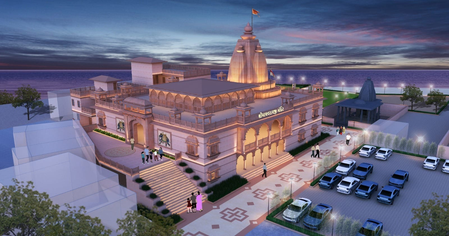
The Gujarat government has commenced the second phase of the Shri Krishna-Rukmini Yatradham redevelopment at Madhavpur in Porbandar district, investing Rs 43.72 crore. This phase aims to restore the historic Madhavrayaji Temple, enhance pilgrim facilities, and upgrade tourism infrastructure at the coastal religious site. The project is part of a larger master plan by the Gujarat Pavitra Yatradham Vikas Board to develop the pilgrimage site linked to the marriage of Lord Krishna and Goddess Rukmini.
The ongoing master plan aims to unify all ancient and religious sites within a one-kilometer radius of Madhavpur village into a single heritage circuit. Following the completion of the first phase at a cost of Rs 47.99 crore, the second phase has now been initiated. This new phase includes the restoration of the Madhavraiji Temple at an estimated cost of Rs 20.25 crore, focusing on preserving the temple and improving facilities for devotees and visitors.
As part of the redevelopment, a 200-meter beachfront near the temple will be transformed into a tourism zone featuring food kiosks, a food court seating area, public toilets, and other visitor amenities. To manage crowds during events like the Madhavpur Fair, the government plans to develop an outer plaza and parking facilities costing Rs 5.31 crore. Additionally, road connectivity to the temple will be enhanced by widening the road connecting the local turtle breeding center to the Madhavrayaji Temple to nine meters, facilitating easier access for pilgrims and tourists.
The project will also incorporate landscaping, fountains, sculptures reflecting Sanatan culture, signboards, and designated selfie points, with an estimated cost of Rs 3.45 crore. Furthermore, underground electrical and plumbing networks will be installed, and a smart irrigation system will be implemented to maintain landscaped areas and greenery. Officials have highlighted that this redevelopment aligns with Prime Minister Narendra Modi’s ‘Vikas Bhi, Virasat Bhi’ vision, aiming to enhance facilities for devotees, boost tourism, and stimulate local employment and economic activity.
