


Gujarat is initiating 20 road projects in various districts with a budget of Rs 1,147 crore to enhance road durability, cut construction expenses, and encourage the reuse of existing road materials. This move aligns with the state’s infrastructure development plan in line with national priorities, including those of Prime Minister Narendra Modi, and is being executed under Chief Minister Bhupendra Patel’s guidance. The focus of this initiative is on climate-resilient engineering techniques and the incorporation of modern technology to prolong road life spans while minimizing environmental impact.
The program encompasses 20 roads spanning districts such as Patan, Gir Somnath, Mahisagar, Bharuch, Morbi, Surendranagar, Surat, Vadodara, Chhota Udepur, Anand, Mehsana, Kutch, Bhavnagar, Jamnagar, and Narmada. Key corridors like Lanwa-Manund-Sander-Balisana and Radhanpur-Mashali-Madhapura in Patan, Bhidiya Somnath Road in Gir Somnath, and Santrampur-Jalod Road in Mahisagar are included in the project. The works will involve widening, resurfacing, four-laning in selected stretches, construction of RCC gutter lines, side shoulders, earthworks, installation of road furniture, rumble strips, and protective structures.
Advanced engineering methods like white topping, glass grid reinforcement, and other stabilization techniques will be employed based on traffic intensity and ground conditions. The selection of technology for each stretch will be site-specific, considering load requirements and long-term maintenance considerations. A key aspect of the program is the use of recycled road material through green construction practices.
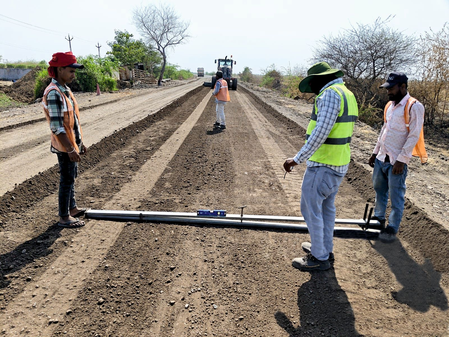
The process includes excavation of existing road layers, stabilization using lime and mechanical pulverization, reuse of the material on-site after compaction, cement treatment, and chemical stabilization. A curing period of about seven days is observed before applying a Stress Absorbing Membrane Interlayer (SAMI) to enhance structural strength and reduce emissions. The reuse of existing road material is expected to enhance sustainability outcomes, reduce project costs, and improve structural strength in the long term.
