


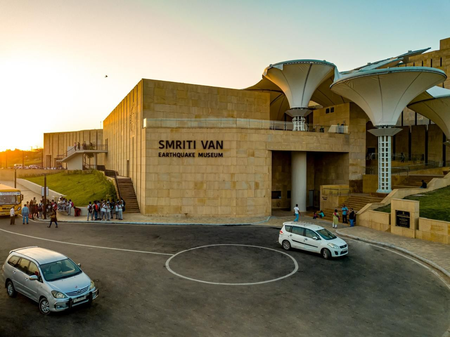
Gujarat’s museums have welcomed over 16 lakh visitors in the last two years, showcasing a growing interest in the state’s cultural and historical heritage. Pankaj Sharma, Director of Archaeology and Museums in Gujarat, highlighted the significant modernization of museums, emphasizing their shift from traditional artifact displays to dynamic centers of knowledge and culture. The state has introduced five new museums in the past decade, such as the Smritivan Earthquake Memorial and Museum in Bhuj, Dandi Kutir in Gandhinagar, and the Vadnagar Archaeological Museum, aiming to preserve heritage while engaging contemporary audiences.
Museums in Gujarat have evolved to meet changing public expectations, transforming into interactive learning spaces that blend history, culture, and technology. Utilizing augmented reality (AR), virtual reality (VR), 3D projection mapping, holograms, and interactive touchscreens, these museums offer immersive experiences to connect visitors with Gujarat’s rich heritage. Officials emphasized Gujarat’s commitment to balancing economic growth with heritage preservation, reflecting the vision of “Vikas Bhi, Virasat Bhi” under Prime Minister Narendra Modi’s leadership.
The Smritivan Earthquake Memorial and Museum in Bhuj, a flagship project, commemorates the 2001 Gujarat earthquake victims and showcases advanced technologies like earthquake simulators. Visitors praise the museum for not only depicting the disaster but also narrating Gujarat’s recovery journey. Dandi Kutir in Gandhinagar, inaugurated in 2015, uses multimedia to depict Mahatma Gandhi’s life and principles within a unique salt-mound-shaped structure. Through innovative storytelling techniques, visitors delve into Gandhi’s life and India’s freedom movement.
The Vadnagar Archaeological Museum, established in 2025, offers a unique excavation-site experience alongside artifact displays, utilizing AR, VR, 3D exhibits, and dioramas to present Vadnagar’s ancient history. This museum provides insights into Gujarat’s historical evolution through seven cultural phases spanning 2,500 years. Additionally, Gujarat is developing the National Maritime Heritage Complex at Lothal, set to be the world’s largest maritime museum, showcasing India’s maritime history and the Indus Valley Civilisation legacy.
The museum at the Statue of Unity in Kevadia documents Sardar Vallabhbhai Patel’s life and India’s princely states’ integration post-Independence. Combining historical exhibits with modern presentation techniques, the museum complements the monumental complex, offering a comprehensive narrative of India’s heritage.
