


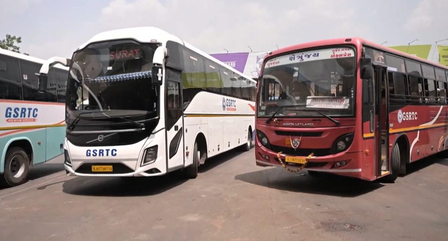
Nearly one-third of the daily revenue of the Gujarat State Road Transport Corporation (GSRTC) now comes from digital payments, marking a significant shift towards cashless transactions. With around 30% of its daily income received through digital modes, GSRTC has introduced various payment options like UPI, debit cards, and credit cards across its fleet of over 8,000 buses. This move towards digital transactions in Gandhinagar has not only enhanced operational efficiency and transparency but also reduced the dependence on cash among passengers.
On average, approximately 27 lakh passengers travel daily on GSRTC buses, contributing to an estimated revenue of Rs 12 crore. Deputy Chief Minister Harsh Sanghavi highlighted the corporation’s progress, stating that daily digital collections have more than doubled from Rs 1 crore to over Rs 2 crore, reflecting a growing trend towards a cashless economy. Passengers are embracing digital payment methods for their ease and convenience, as seen in the case of Manish Ghanchi from Ahmedabad, who recently used a QR code for ticket payment during his journey to Vadodara on a GSRTC premium bus.
The digitization of payments for student passes has also played a role in boosting cashless revenue for GSRTC. Notably, a significant portion of the corporation’s digital transactions, about 85%, is facilitated through UPI, underscoring its widespread adoption in Gujarat. This digital transformation aligns with the state’s broader governance initiatives, led by Chief Minister Bhupendra Patel, to strengthen the digital infrastructure and enhance bus services, particularly in remote areas, with a focus on improving passenger experience and increasing daily ridership.
GSRTC officials have outlined plans to further expand cashless transactions in the upcoming months, aiming to elevate the share of digital payments to 60-70%. This expansion will encompass commercial services and passenger pass systems, demonstrating the corporation’s commitment to fostering a robust digital ecosystem.
