


Following a significant ruling by the Indore Bench of the Madhya Pradesh High Court concerning the Bhojshala complex in Dhar, the Hindu party has taken prompt legal action. A caveat petition was lodged in the Supreme Court of India on Friday by Jitendra Singh Vishen, represented by Advocate Barun Kumar Sinha. This legal move aims to ensure that the Hindu petitioners are given a fair hearing before any decisions are made on potential appeals against the High Court’s judgment.
The Muslim side, on the other hand, has indicated its intention to contest the ruling. Dhar City Qazi Wakar Sadiq mentioned that they would carefully assess the Archaeological Survey of India report before proceeding to the Supreme Court. They plan to challenge the verdict based on objections raised during the survey, arguing that a final decision should not solely rely on an archaeological report according to legal precedents.
The High Court’s ruling on Friday has been hailed as a significant win for the Hindu community. The court identified the eleventh-century structure as a temple dedicated to Goddess Saraswati and placed its management under the Central Government and the Archaeological Survey of India. Notably, the court overturned the 2003 administrative order that permitted the Muslim community to offer Friday prayers at the site. The court suggested that the Muslim side, viewing the structure as the Kamal Maula Mosque, could seek alternative land in Dhar from the state government for constructing a mosque.
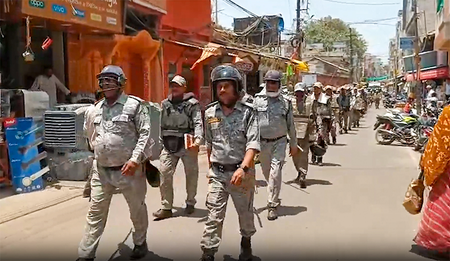
The verdict has sparked widespread jubilation in Dhar. Celebrations erupted at the “Akhand Jyoti Temple,” with members of the Bhoj Utsav Samiti and numerous devotees gathering for religious chants and sweet distribution. Women congregated in large numbers to offer special prayers and light lamps in gratitude to Goddess Vagdevi. For many, this ruling signifies the end of years of patience and struggle to restore the site’s perceived original grandeur.
