


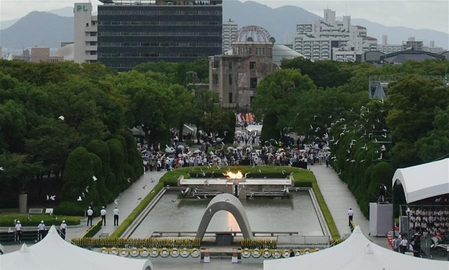
The city assemblies of Hiroshima and Nagasaki have recently adopted statements urging the Japanese government to uphold the country’s Three Non-Nuclear Principles. Hiroshima City Assembly unanimously passed its statement, expressing concern over attempts to revise these principles and emphasizing the importance of respecting the sentiments of atomic-bombed cities’ residents. On the other hand, the Nagasaki City Assembly, through a majority vote, highlighted the long-standing national policy status of the Three Non-Nuclear Principles and criticized any potential revisions by the ruling party.
The US military dropped atomic bombs on Hiroshima and Nagasaki on August 6 and 9, 1945, respectively, in a bid to expedite Japan’s surrender during a war of aggression. The Three Non-Nuclear Principles, which include not possessing, producing, or allowing nuclear weapons on Japanese soil, were initially declared by former Prime Minister Eisaku Sato in 1967 and officially adopted by the parliament in 1971. The recent National Security Strategy, part of the Cabinet’s 2022 approvals, affirms the enduring commitment to these principles.
Reports suggest that Prime Minister Sanae Takaichi is contemplating a review of the prohibition on nuclear weapons entering Japan’s territory, a key aspect of the Three Non-Nuclear Principles. In a related development, a Japanese civil group had earlier submitted a petition to the foreign ministry, urging a clear reiteration of the government’s dedication to the Three Non-Nuclear Principles as a fundamental national policy.
